This entry was published on February 7, 2026. Its photographs preserve snow on roofs and roads, an uneven batch of pan-roasted coffee, novelty overshoes with oversized paw pads, and the tracks those pads left outside.
The page stays with what its image archive can establish: winter roofs and roads, an imperfect roast, oversized paw pads, and the trail they stamped into the private yard.
The first object explained the later tracks
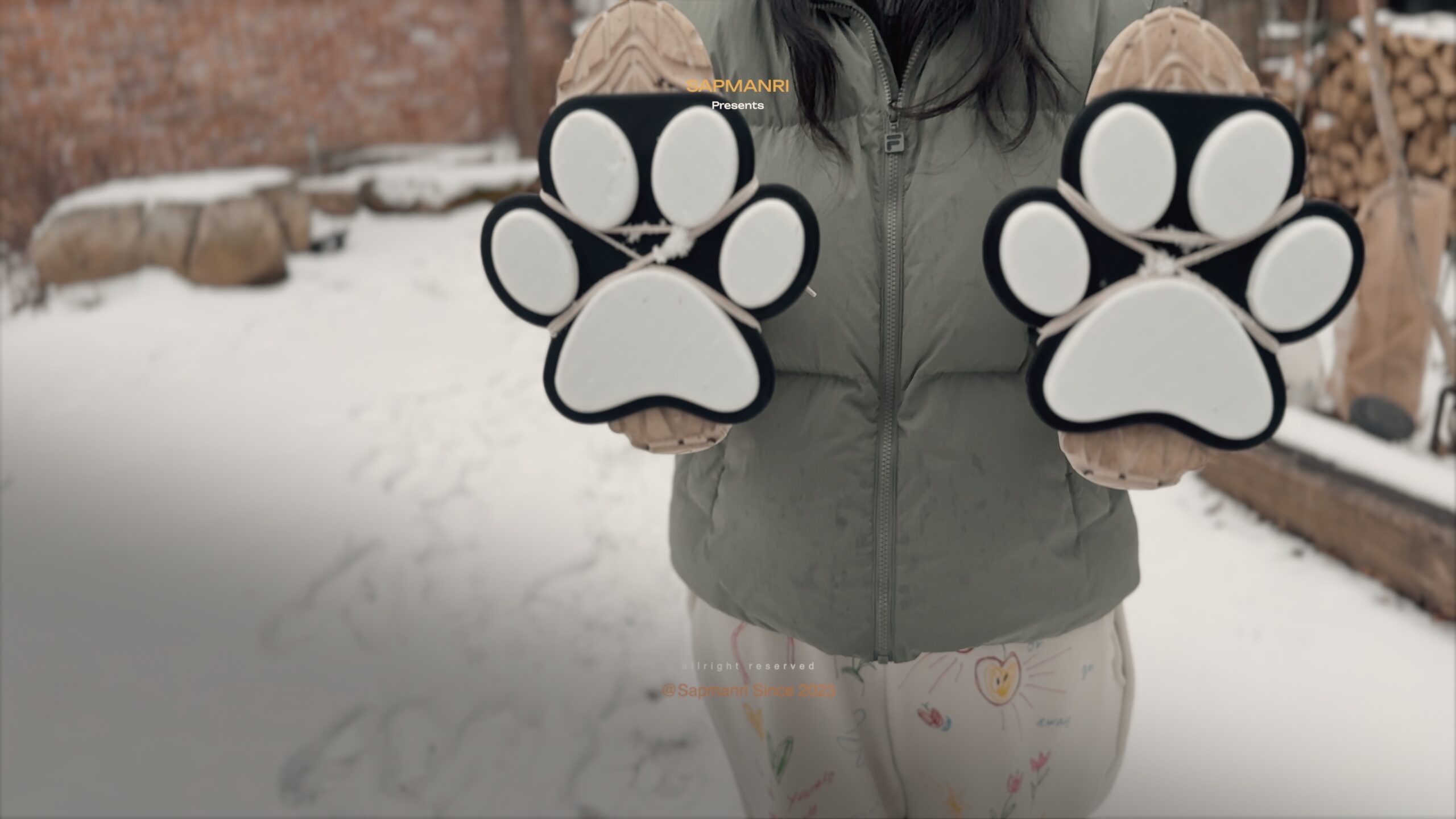
Without this frame, the marks outside might look like an animal mystery. The object makes the joke visible at the beginning: two dark overshoes carry pads far larger than a real house cat's feet.
Snow simplified the village from above
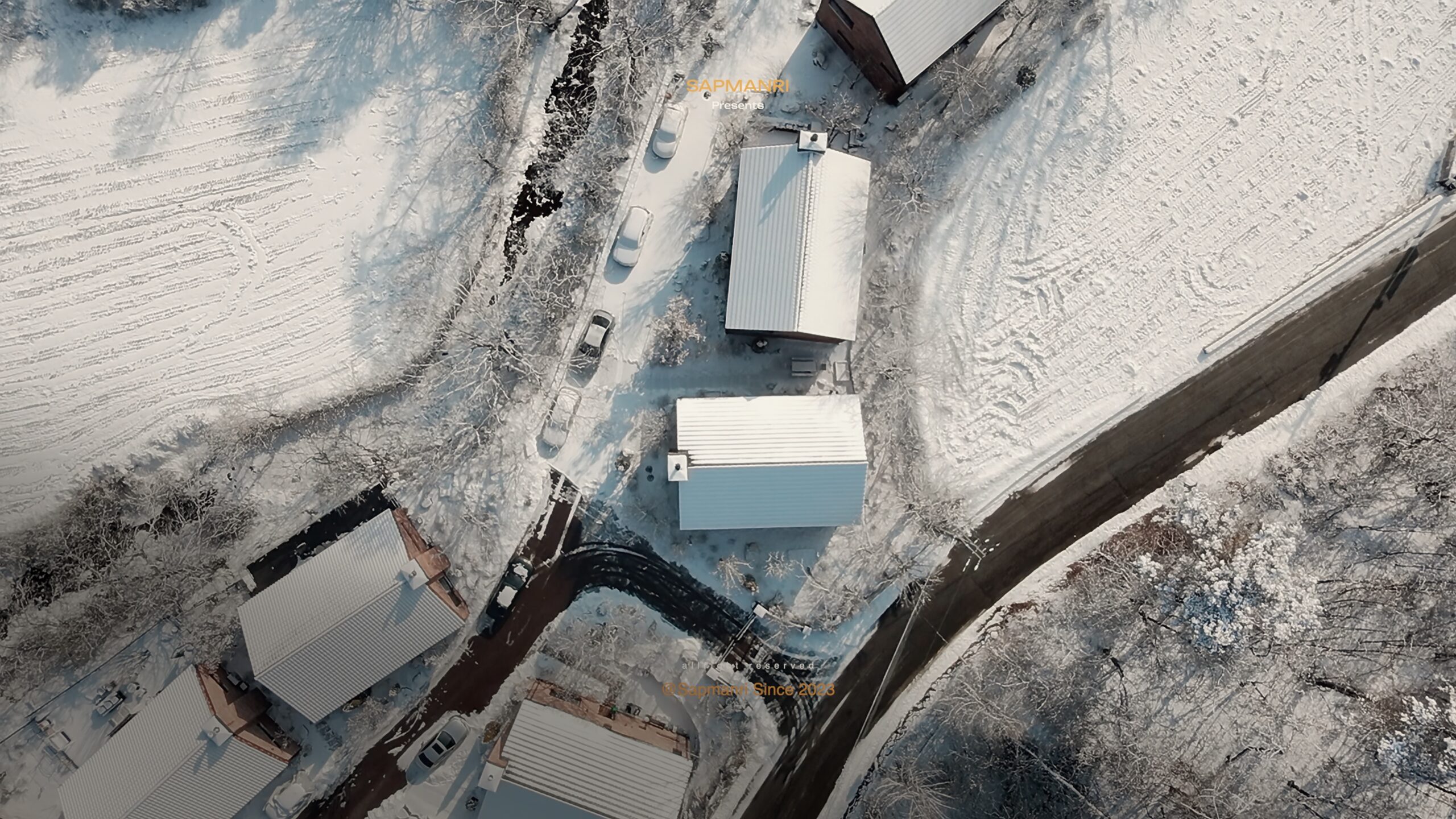
The aerial photograph records a settlement rather than an untouched wilderness. Roads remain visible, roofs form a tight group, and dark trees mark the edges. Snow softens those lines without erasing the fact that people still need to move through them.
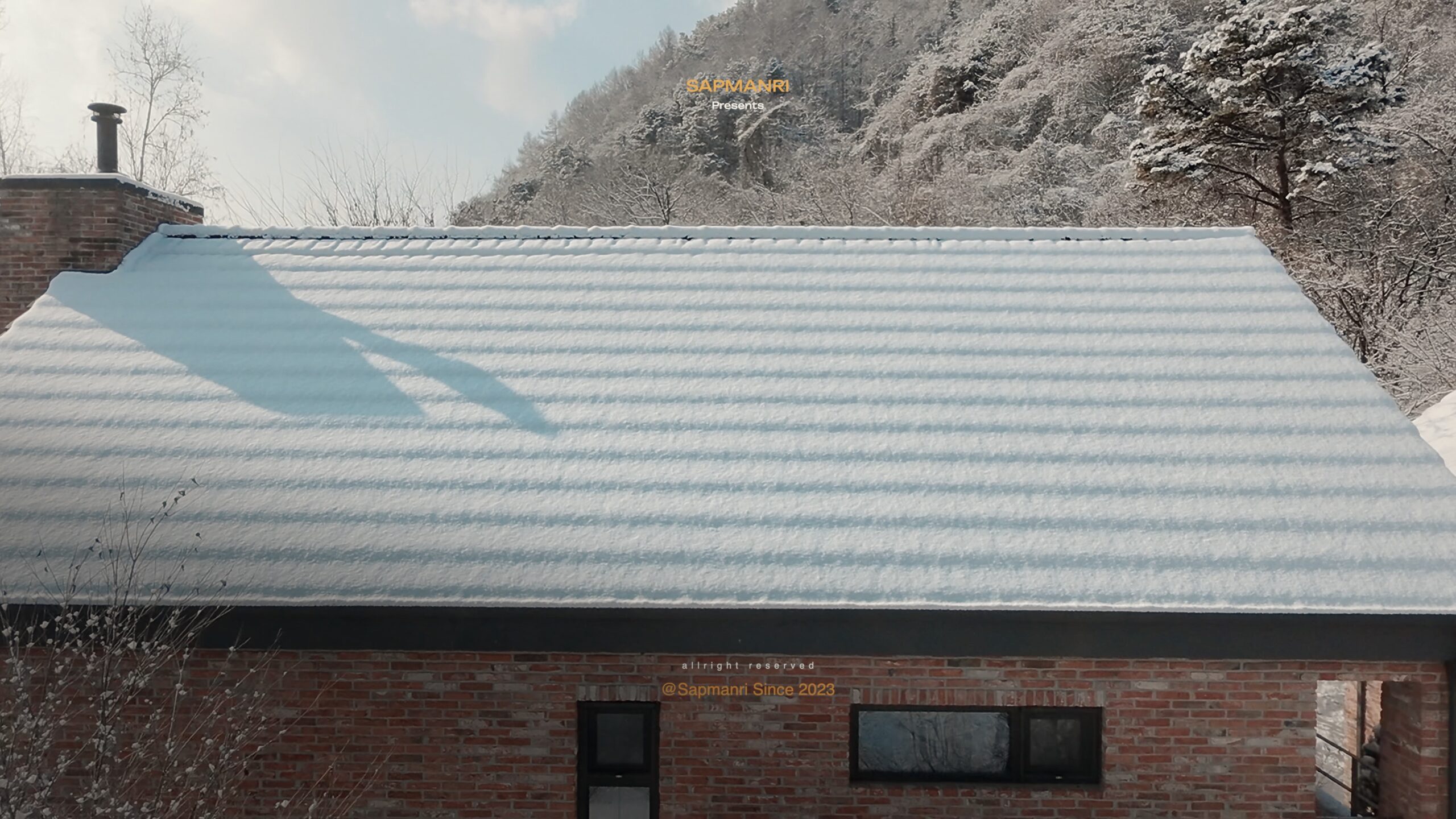
The second snow frame is close enough to show depth along the roof edge. We do not turn that depth into a measurement. The image tells us only that enough snow accumulated to change the ordinary surfaces around the house.
The pan-roasted beans did not come out evenly
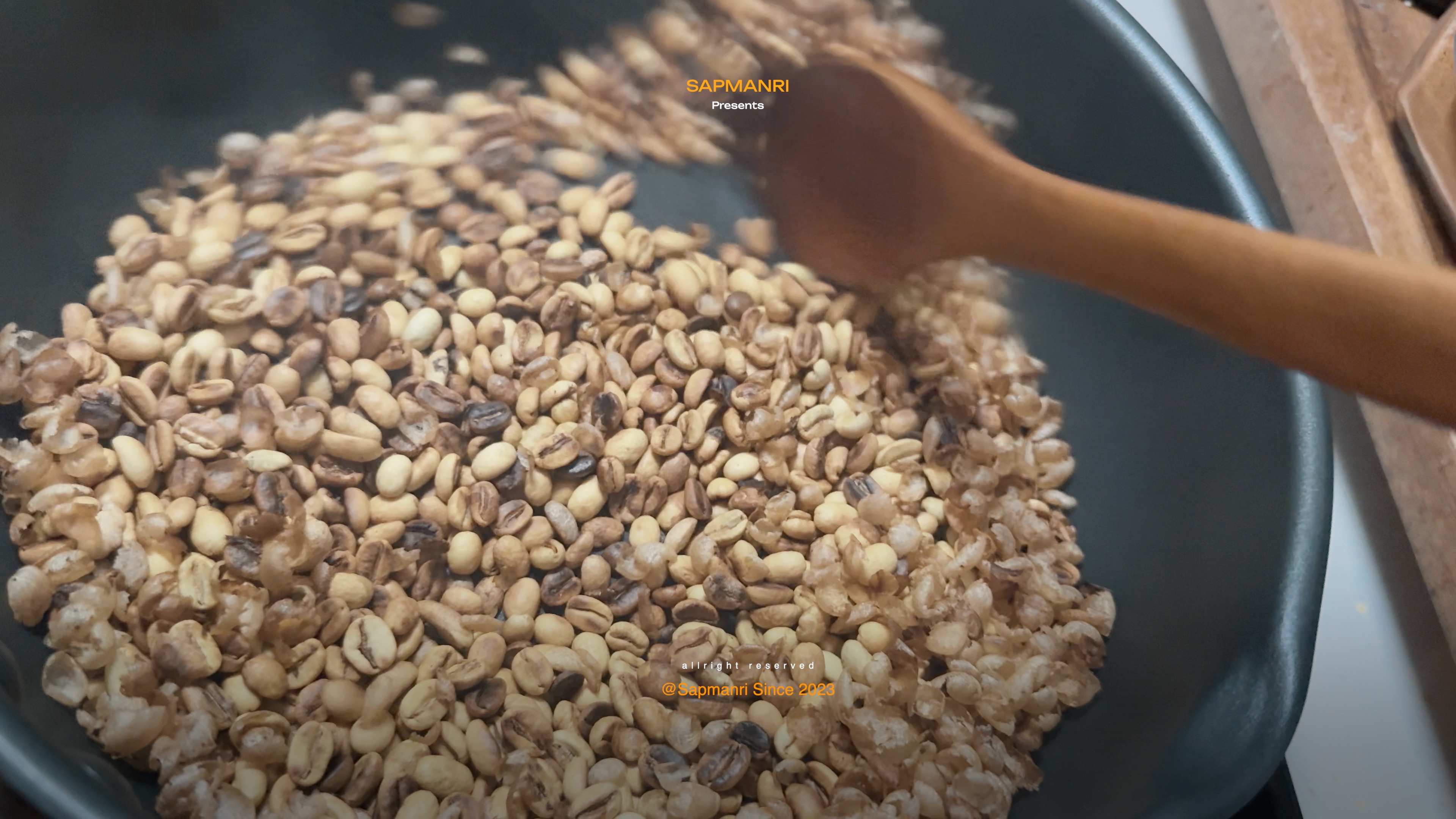
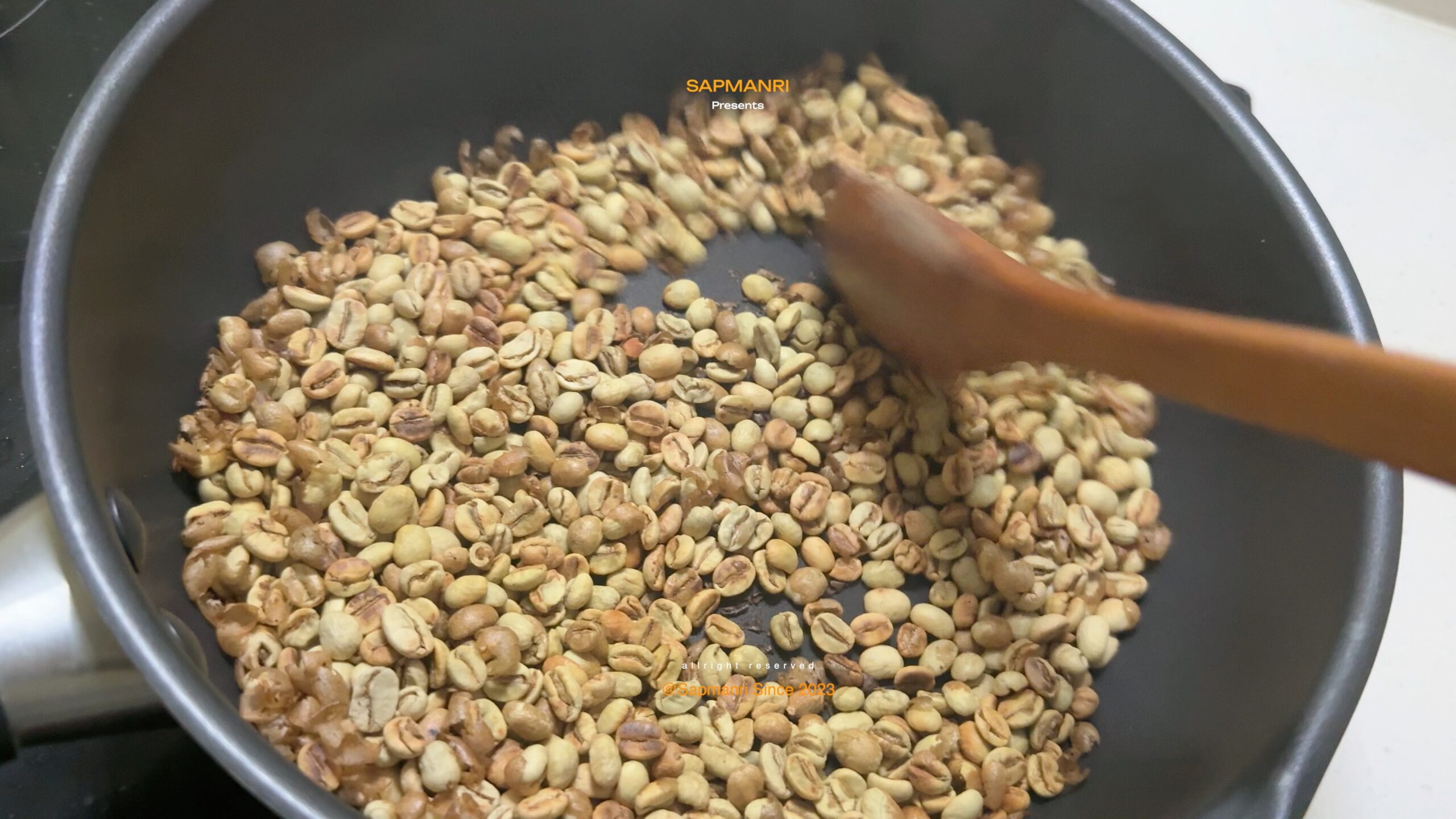
The coffee frame is useful because it resists a perfect result. Some beans are dark, some are pale, and chaff remains in the pan. Stove scales, pan materials, batch sizes, ventilation, and beans differ too much for one household's induction setting to travel safely as a standard.
Pan roasting produces heat, smoke, and chaff and demands continuous attention. This article does not provide a tested method. For the fuller limits we learned while reviewing the archive, see our home coffee-roasting field guide.
The paw pad was deliberately oversized
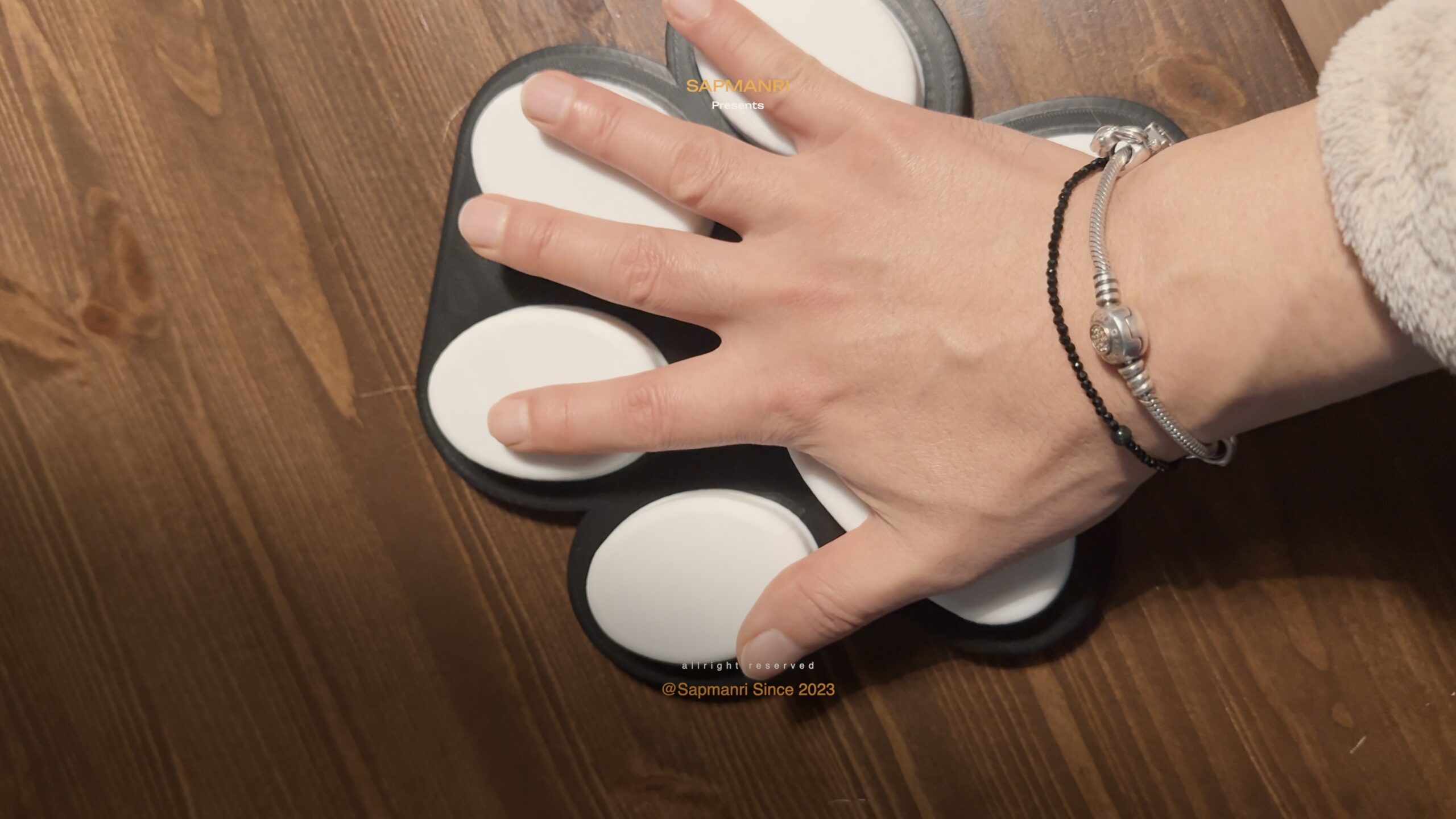
The close-up removes any doubt about scale. The pad is a graphic paw shape meant to leave an impression. It is not shaped like a winter boot tread and should not be treated as one.
A private patch of snow became the drawing surface
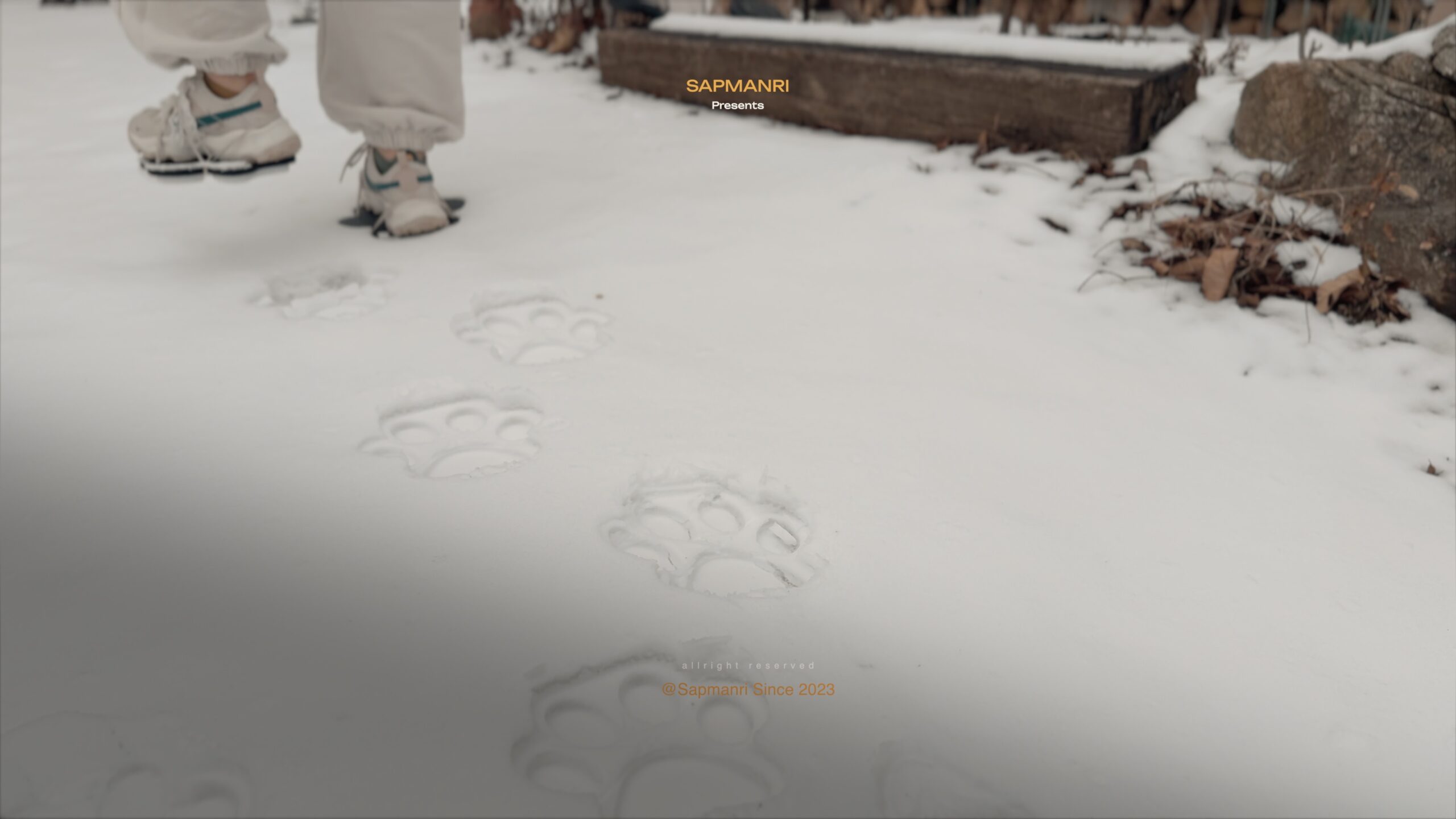
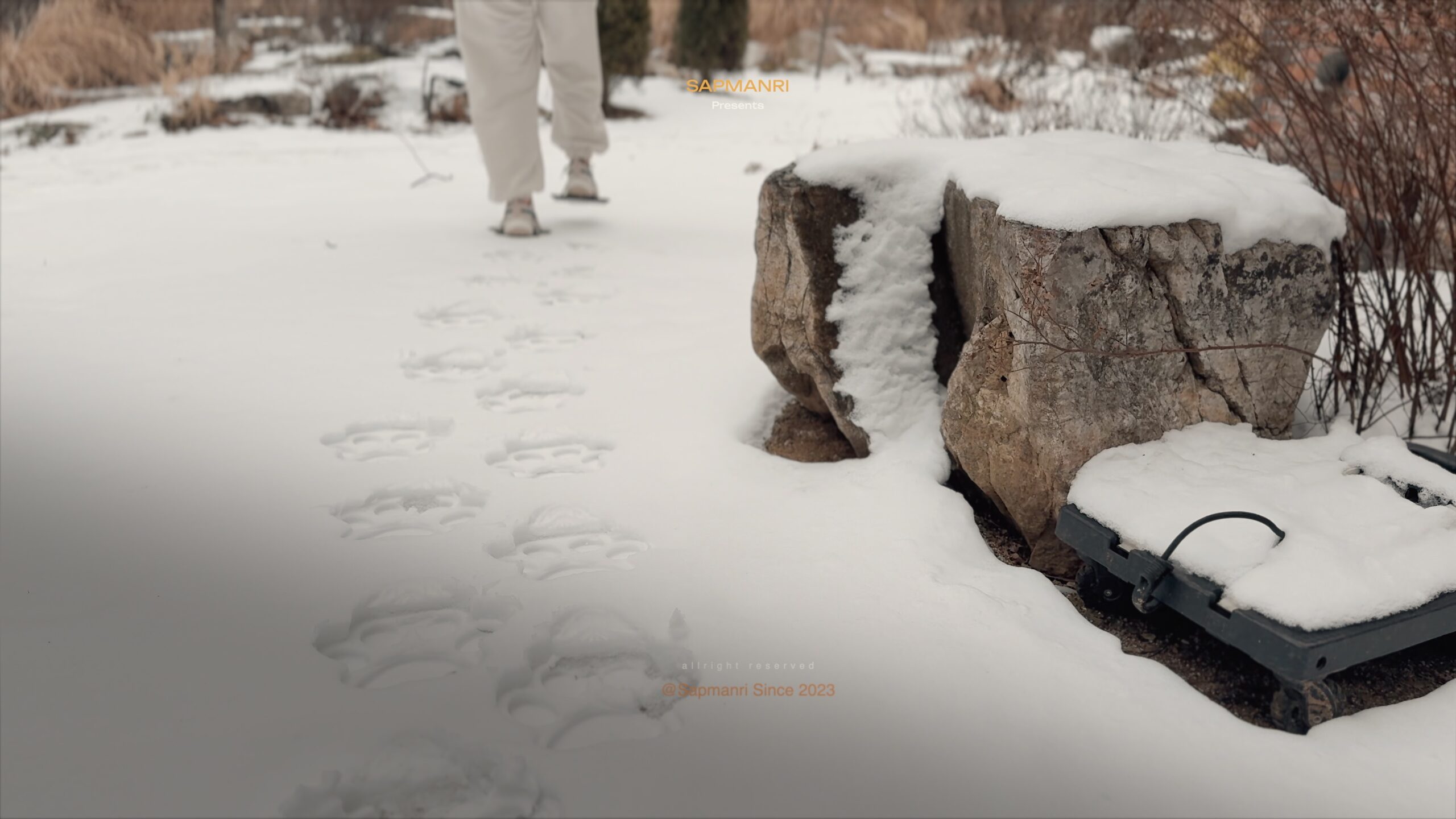
The tracks gave the yard an imaginary visitor for a few minutes. That is the whole function of the object, and it is enough. A tool can be worth making because it changes how a familiar surface is seen.
The props are not winter safety equipment
Broad, smooth novelty pads can reduce stability and hide uneven ground. If used at all, they belong on a flat private patch of soft snow, at walking speed, with ordinary hazards already checked. They should not be used on ice, slopes, stairs, roofs, roads, near traffic, or as substitutes for footwear designed for winter traction.
The day now ends where the photographs end: the village under snow, an imperfect pan of beans, and a false animal trail around the rocks. It does not need an invented gallery or dessert to feel full.