I began roasting green coffee in a frying pan because the pan and wooden spoon were already in our kitchen. The simple equipment made the changes in the beans easy to watch, but it did not make the process risk-free.
A hot pan, loose chaff, smoke, and a distracted cook can create real hazards. The observed colour sequence matters only within that safety boundary, so I stay beside the pan and treat stopping early as a valid outcome.
Start with the label, not an old price
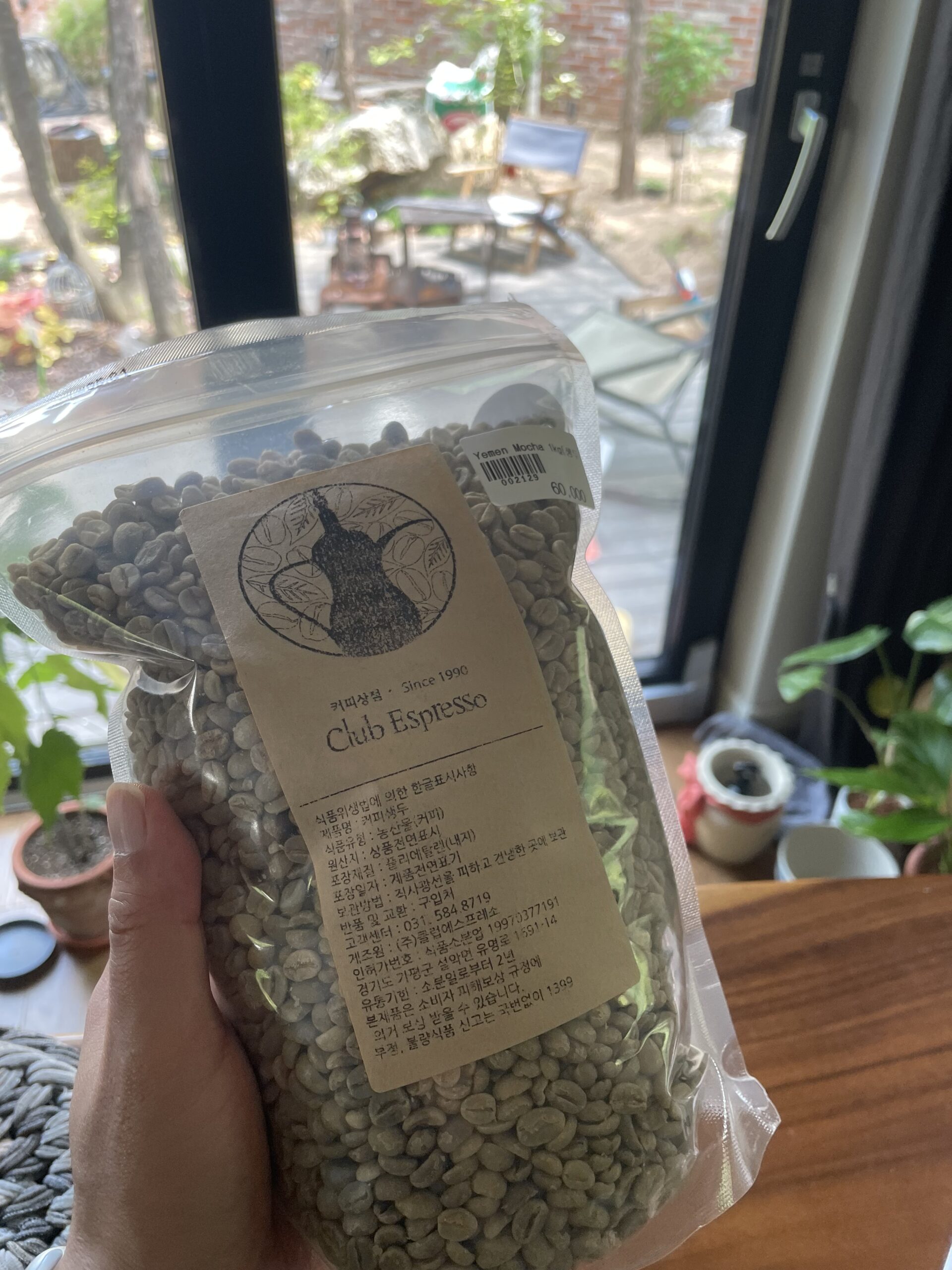
The photographed bag contains green Yemen Mocha beans sold through Club Espresso. The package shows origin and importer information. Price, stock, crop, and packing details can change, so the old purchase price is not presented as current buying guidance.
Heat and smoke are real risks
I stay beside the pan for the entire roast, keep children and cats away from the stove, and make sure the kitchen can be ventilated. A lid or baking sheet should be within reach for a pan fire. If I have to leave the kitchen, the burner goes off.
That is consistent with the U.S. Fire Administration's cooking fire safety guidance: stand by the pan, turn off the burner if leaving, and respond to smoke or excessive heat rather than waiting for the situation to worsen.
Our small-batch setup
For this record, the beans went into a cold, dry pan in a layer shallow enough to stir continuously. This is our setup, not a universal temperature or timing formula. Pan material, burner strength, batch size, and bean moisture all change the rate of the roast.
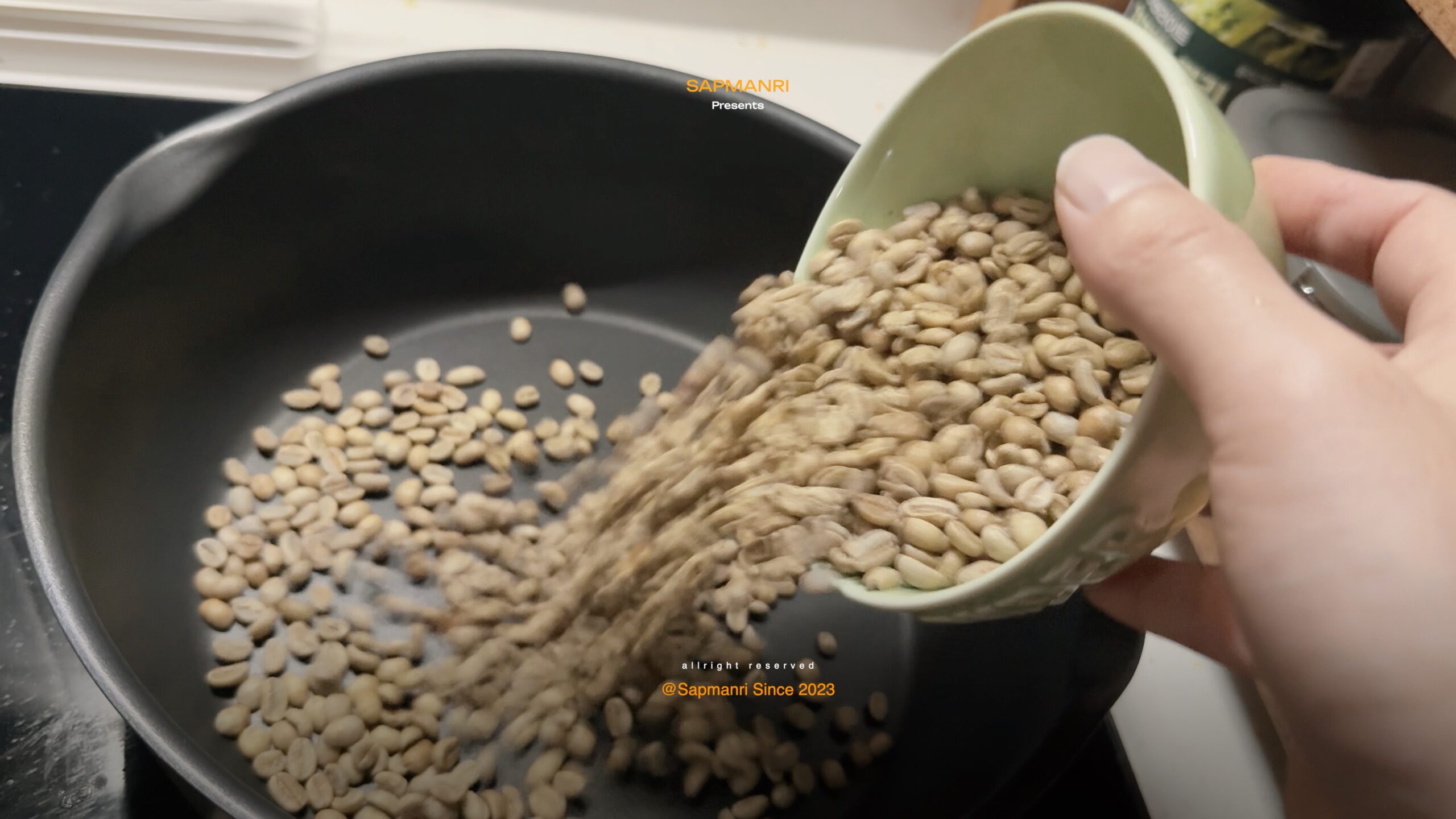
Before starting, I prepare a heat-safe cooling surface. Searching for a tray after the beans are dark means leaving a hot pan at exactly the wrong moment.
Remember the starting colour
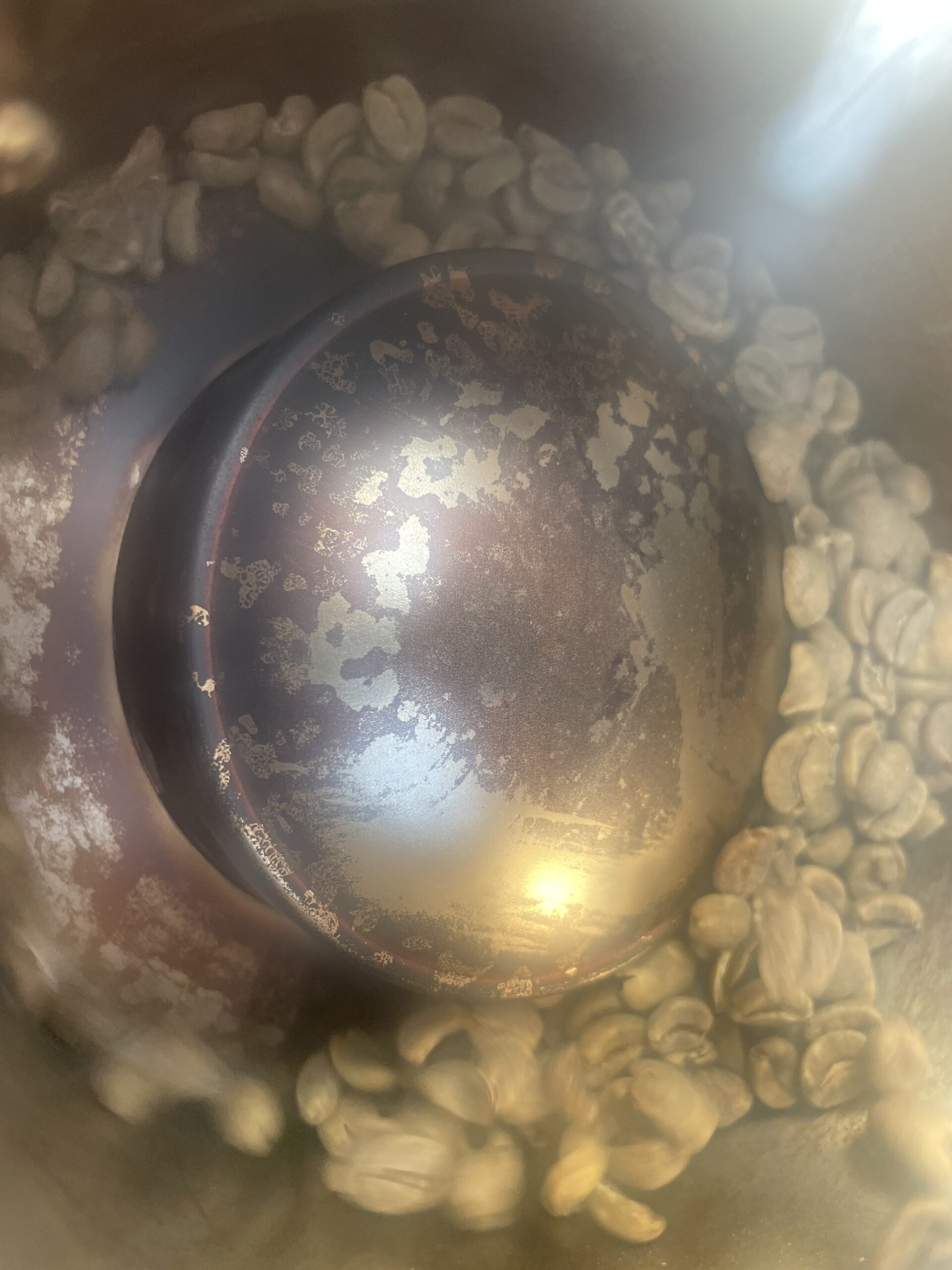
Green coffee is pale grey-green and smells very different from roasted coffee. Looking carefully at that starting point makes later colour changes easier to judge.
Stir through the uneven middle stage
As our beans heated, their colour moved through yellow and patchy tan while papery silverskin loosened. The pan did not heat every bean identically, so continuous movement mattered. A bean that remains against one hot spot can darken while its neighbours are still pale.
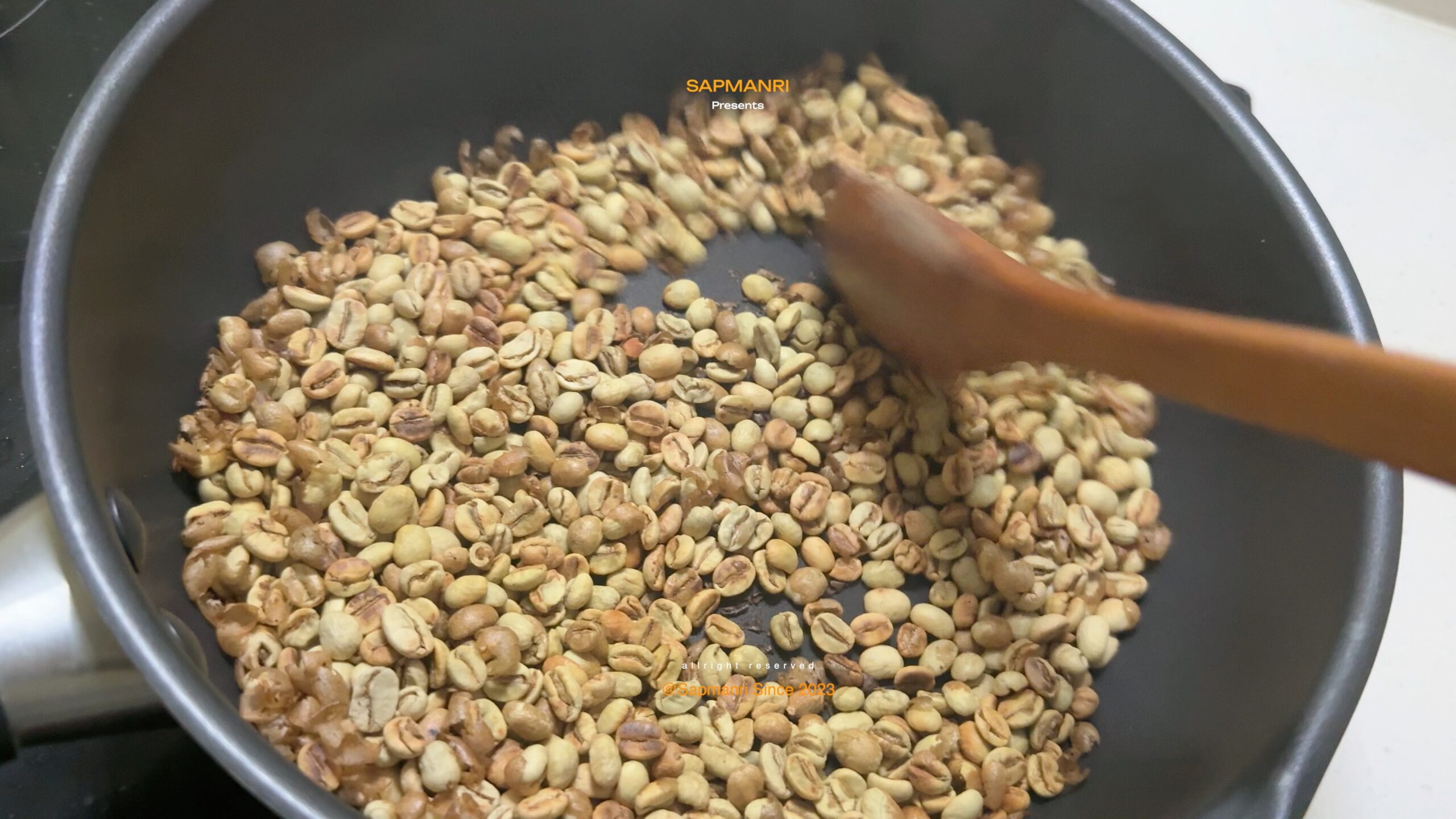
I do not give a minute-by-minute schedule because our clock cannot account for another person's pan or stove. Colour, smell, sound, smoke, and the behaviour of the specific batch all require attention.
Stop before the pan makes the decision
The change accelerates as the beans become brown. If smoke becomes concerning or the roast begins to feel uncontrolled, I turn off the heat. Finishing a target roast is less important than keeping the situation safe.
Beans continue to develop in a hot pan after the burner is off, so I transfer them promptly to the prepared heat-safe surface and spread them out to cool. I do not handle or seal them while they are hot.
What this record can and cannot teach
The photographs can help someone recognise the broad sequence from green to yellow, tan, and brown. They cannot prescribe the correct heat, time, final colour, or safe equipment for every kitchen.
For a first attempt, use a very small batch, remain at the stove, ventilate, and accept that uneven beans are information rather than a reason to raise the heat aggressively. A dedicated roaster with its own instructions may be a better choice for anyone who cannot safely manage smoke and constant stirring indoors.