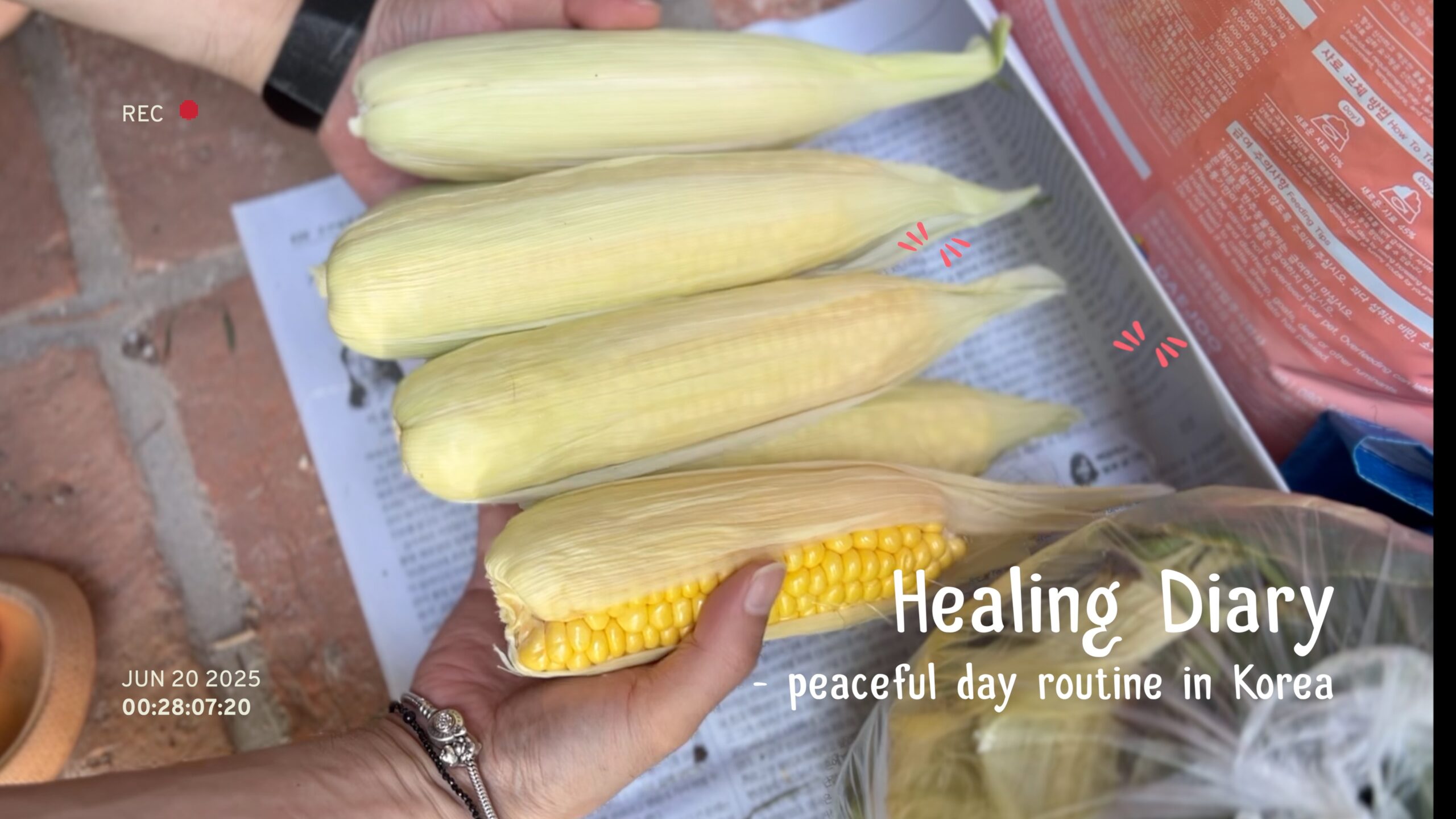
Sweet corn is one of the few ingredients that tells you when it wants attention. In our kitchen, the box never waits. The ears are husked, boiled, and eaten on the day they arrive. Whatever we cannot finish goes into the freezer after cooking.
This is our household method, not a promise that every variety or every refrigerator will behave identically. The useful part is the sequence: deal with the corn while it is fresh, separate what you will eat now from what you will keep, and label the portion before it disappears into the freezer.
Why we handle it on arrival day
Fresh corn is at its sweetest soon after picking. We can taste the difference when a box sits around, so we treat arrival day as the beginning of the work rather than the beginning of storage. We open the box, remove the husks, and decide how much will be served immediately.
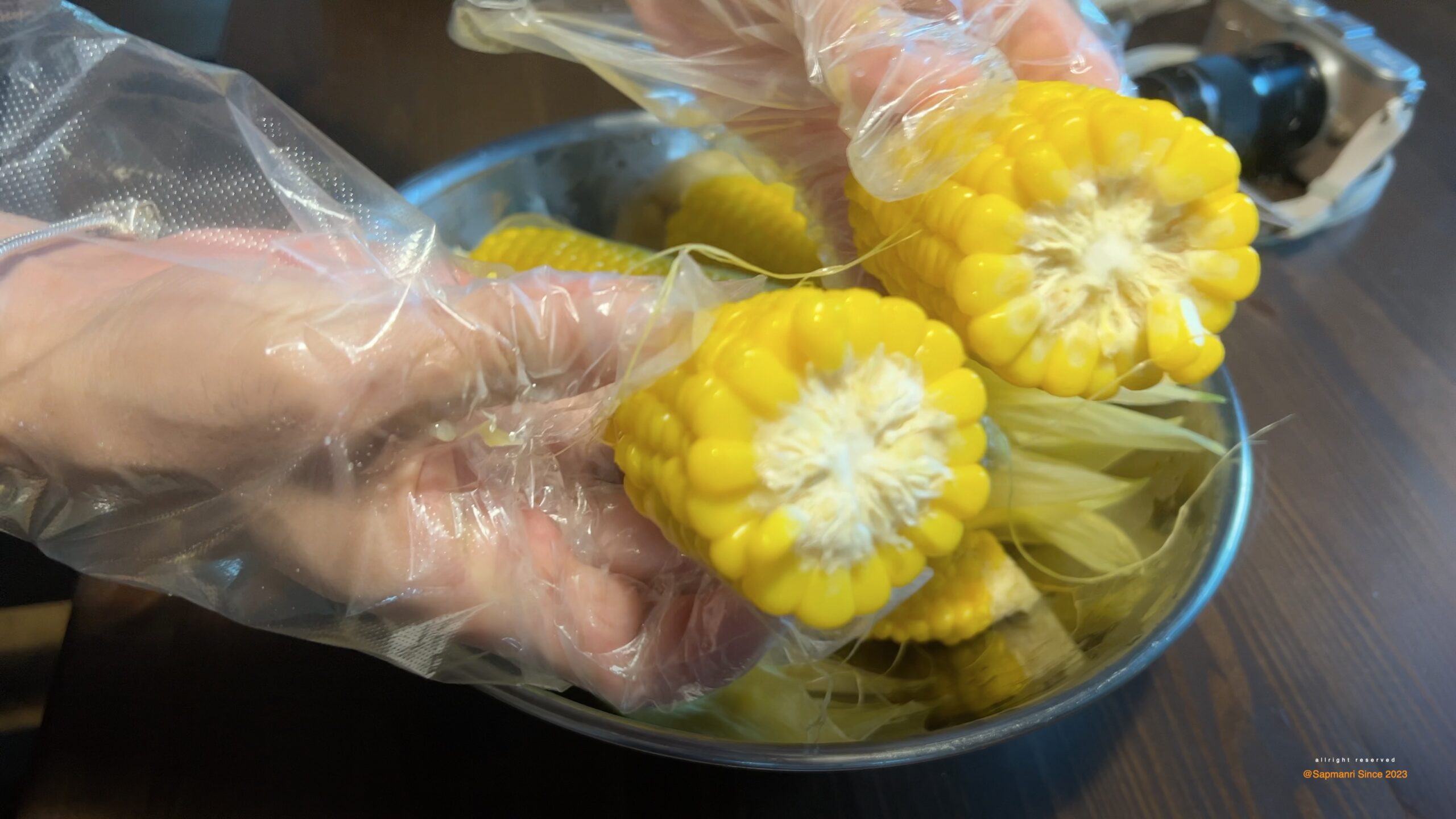
The ears that are going to the table are boiled and eaten while they are still warm. We snap them in half so that they are easier to serve and so that the pot does not have to be larger than necessary. The remaining ears are allowed to cool before they are packed.
If you need to wait a day or two
Sometimes the box arrives on a day when there is no time to cook. In that case, we leave the husk on, wrap the ears in newspaper, and put them in the coldest part of the refrigerator. This is a short holding measure, not a way to keep corn indefinitely. The sooner it can be cooked, the better the result has been for us.
Keeping the husk on also prevents us from doing half the job and then forgetting the corn. The box stays visibly unfinished, which is a small but useful reminder to cook it next.
Our freezer method
- Boil the ears before freezing them.
- Cool them enough to handle and decide whether to keep whole ears or cut kernels.
- Wrap individual ears, or spread kernels on a tray first so they freeze separately.
- Move the frozen portions into a labelled bag or container with the date.
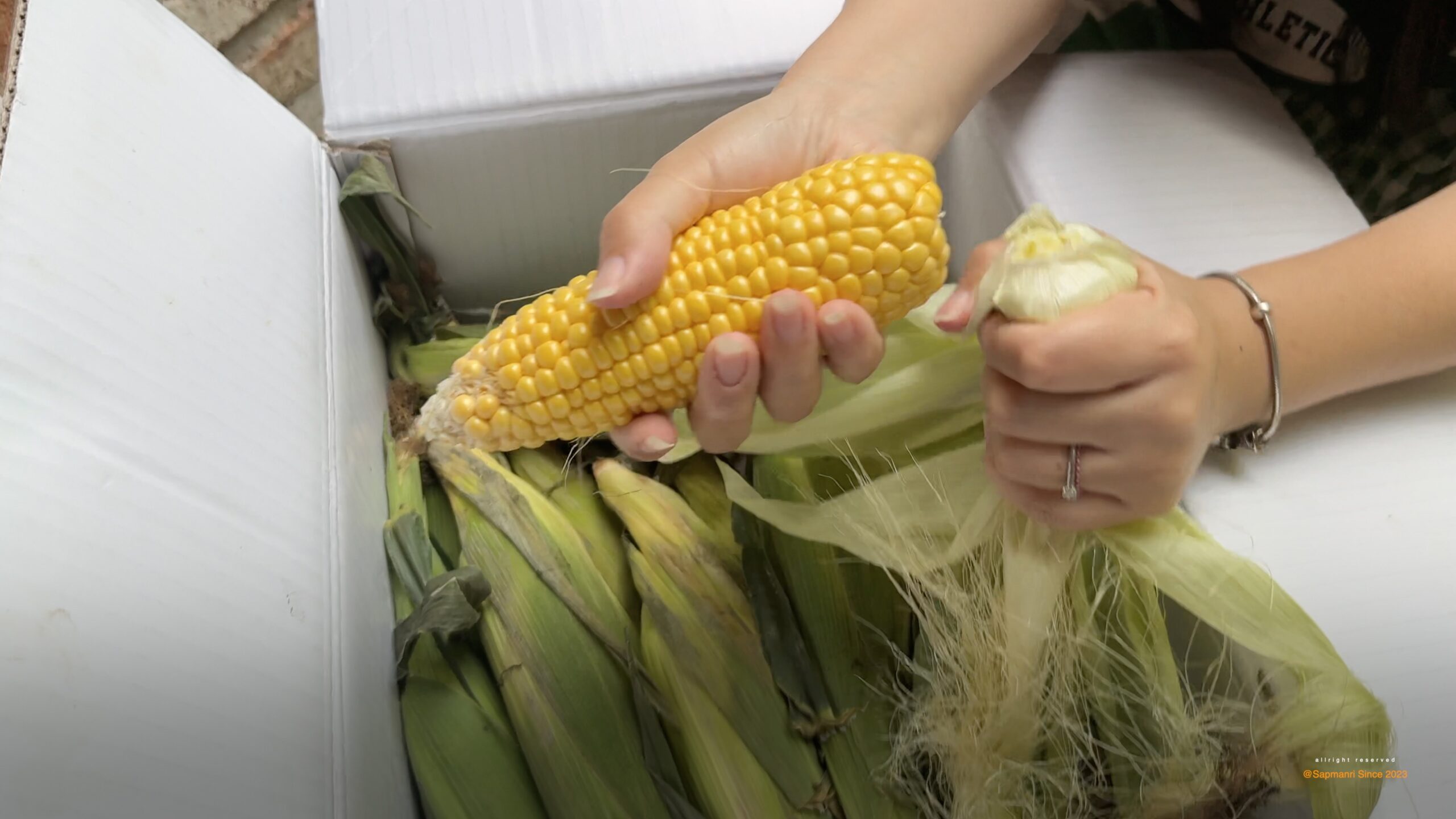
We freeze only what we did not eat that day, and we freeze it already cooked. When we need it later, steaming or microwaving it straight from frozen is simpler than planning a second preparation day. The texture is not exactly the same as corn eaten from the pot, but it remains useful for meals when the original box is long gone.
What we noticed after trying both forms
Whole ears are convenient when we want corn as a side dish. Kernels are more flexible: they can go into rice, soup, or a quick pan of vegetables without needing to be cut while frozen. The choice is less about a perfect rule than about the meals we actually make. If we already know the kernels will be used in small amounts, cutting them after boiling saves space.
| Method | Our practical window | What it is good for |
|---|---|---|
| Raw, refrigerated | A couple of days | Short delay before cooking |
| Boiled whole ears, frozen | About 2–3 months | Serving as a side dish |
| Boiled kernels, frozen | About 2–3 months | Rice, soup, and small portions |
Those time ranges are the ones we use in our own kitchen, where the freezer is kept consistently cold. For the best flavour, we use older portions first and do not treat a printed date as a substitute for checking smell, texture, and signs of freezer damage.
The short version
If we are eating the corn today, we boil it today. If we need to keep it, we cook it before freezing. The method is ordinary, but that is exactly why it has stayed with us: a fresh box becomes a meal, and the part that would otherwise be forgotten becomes several small meals later.