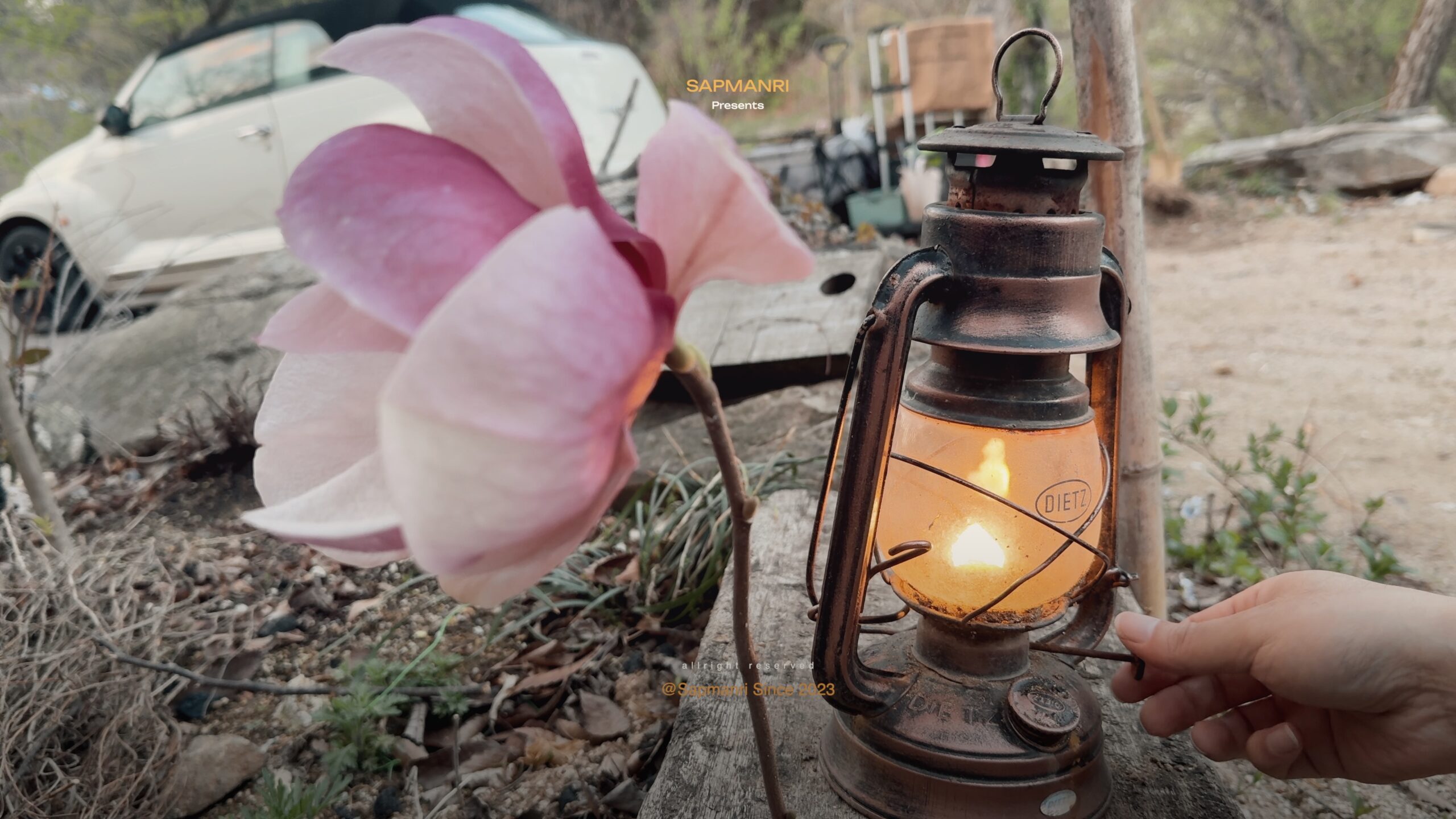
This entry was published on April 18, 2026. The hero image preserves a magnolia bloom beside a lantern, while the work photographs show two people carrying long branches and a low border made from short pieces placed vertically around a garden bed.
The object is a decorative border rather than a fence: it is neither tall nor strong enough to act as a protective barrier.
Magnolia marked the week, not every petal
The opening flower is recognisable as a pink magnolia in the original garden record. Later frames include many pale petals on the ground, but they do not provide enough detail to identify every fallen petal as magnolia. Spring put several signs in the same yard, and the photographs do not require us to collapse them into one species.
The useful date is the season's threshold: evenings were still cool enough for lantern light, while the daytime work had moved outdoors.
The material arrived at full length

Two people pull long bare branches along the road. The frame records awkward weight and length more clearly than any finished beauty. It also shows why branch work needs space and attention: an irregular end can swing farther than expected, catch on clothing, or strike someone walking close behind.
We cannot determine the tree species or whether every branch came from the same source. We can say only that fallen or cut material was collected and moved for reuse in the garden.
The finished object was a low garden edge
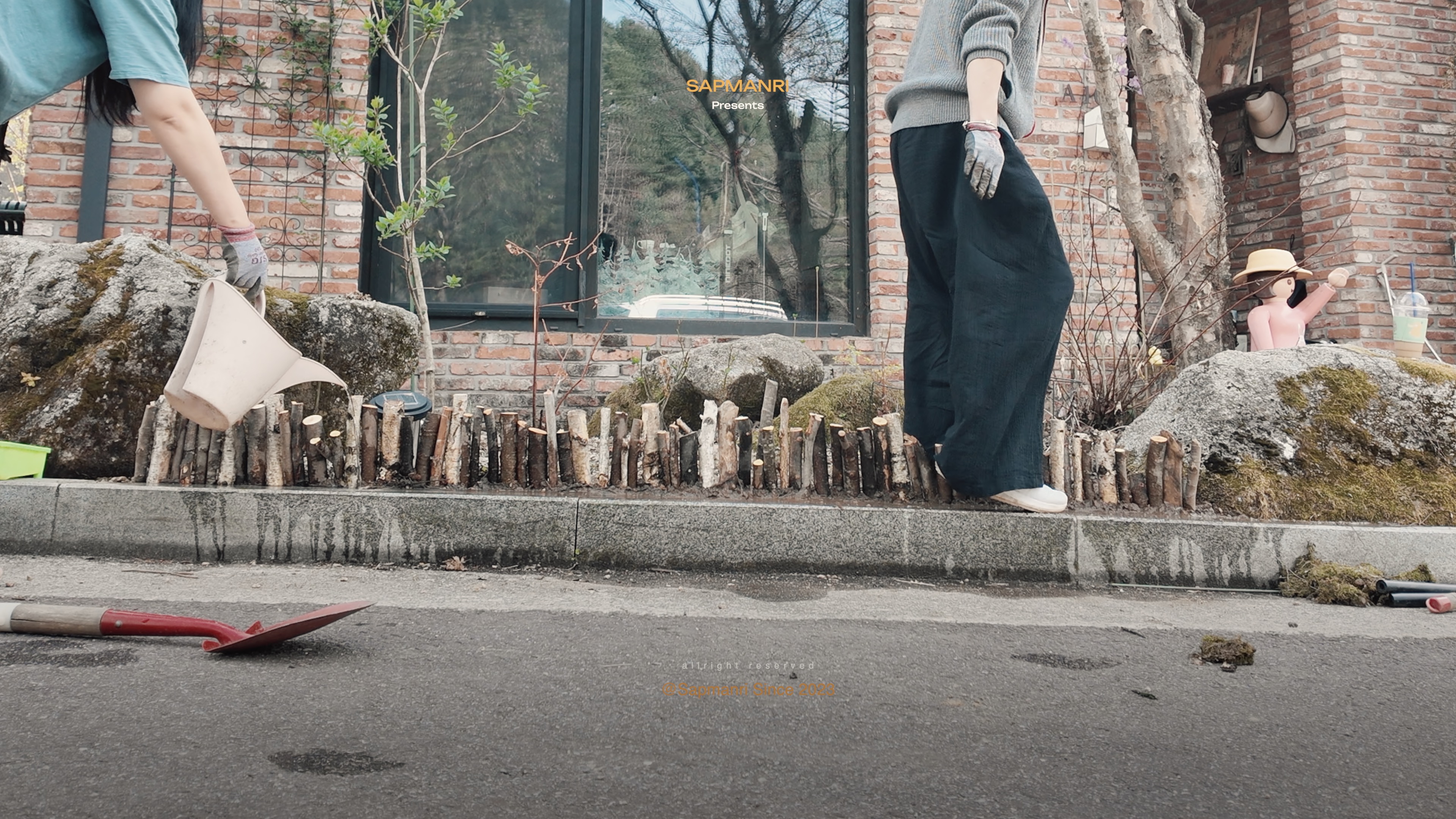
The result bends around a planted area in a line of short vertical pieces. The heights vary and the bark remains visible. That irregularity is part of the object, but it also sets its limit: this border is visual and decorative.
It should not be relied on to restrain a child, pet, vehicle, or animal, and it is not a substitute for a code-compliant fence or retaining structure. Soil movement, rot, frost, and weather can loosen the pieces over time.
Petals changed the ground after the work
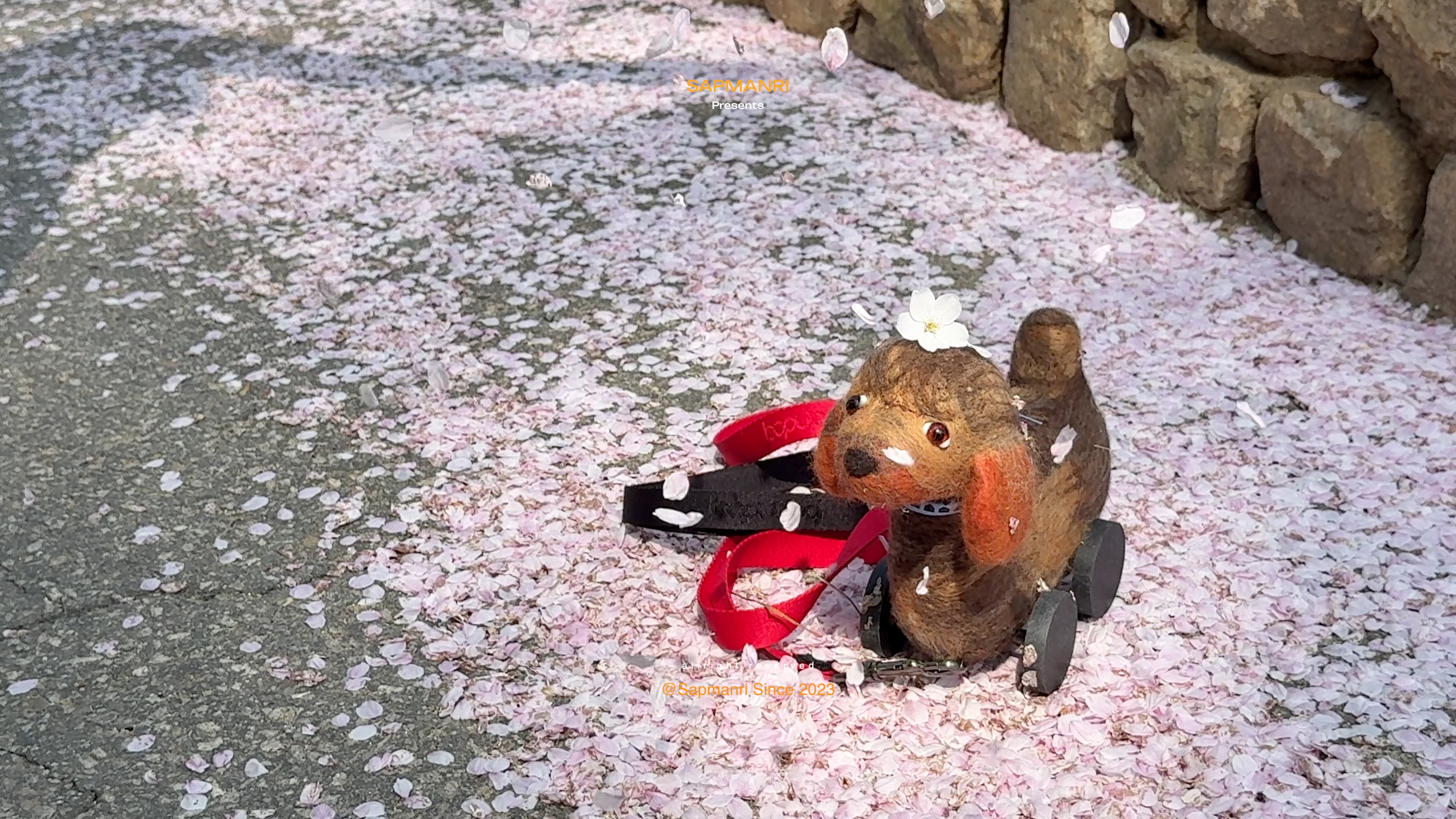
A small wheeled felt animal appears among the petals. It does not explain how the border was built; it explains why this record was kept. The work and the playful interruption belonged to the same afternoon.
Practical limits of a branch border
- Wear gloves and eye protection while cutting or stripping irregular branches.
- Cut or cover sharp ends and keep the border outside normal walking lines.
- Check that pieces cannot roll, tip, or become hidden trip hazards.
- Inspect after heavy rain, frost, or ground movement, and remove softened or rotting wood.
- Keep treated, painted, or unknown wood away from edible beds unless its use is known to be appropriate.
These are reproduction boundaries, not a claim that each precaution can be verified from the photographs.
The lantern brought the garden back into view
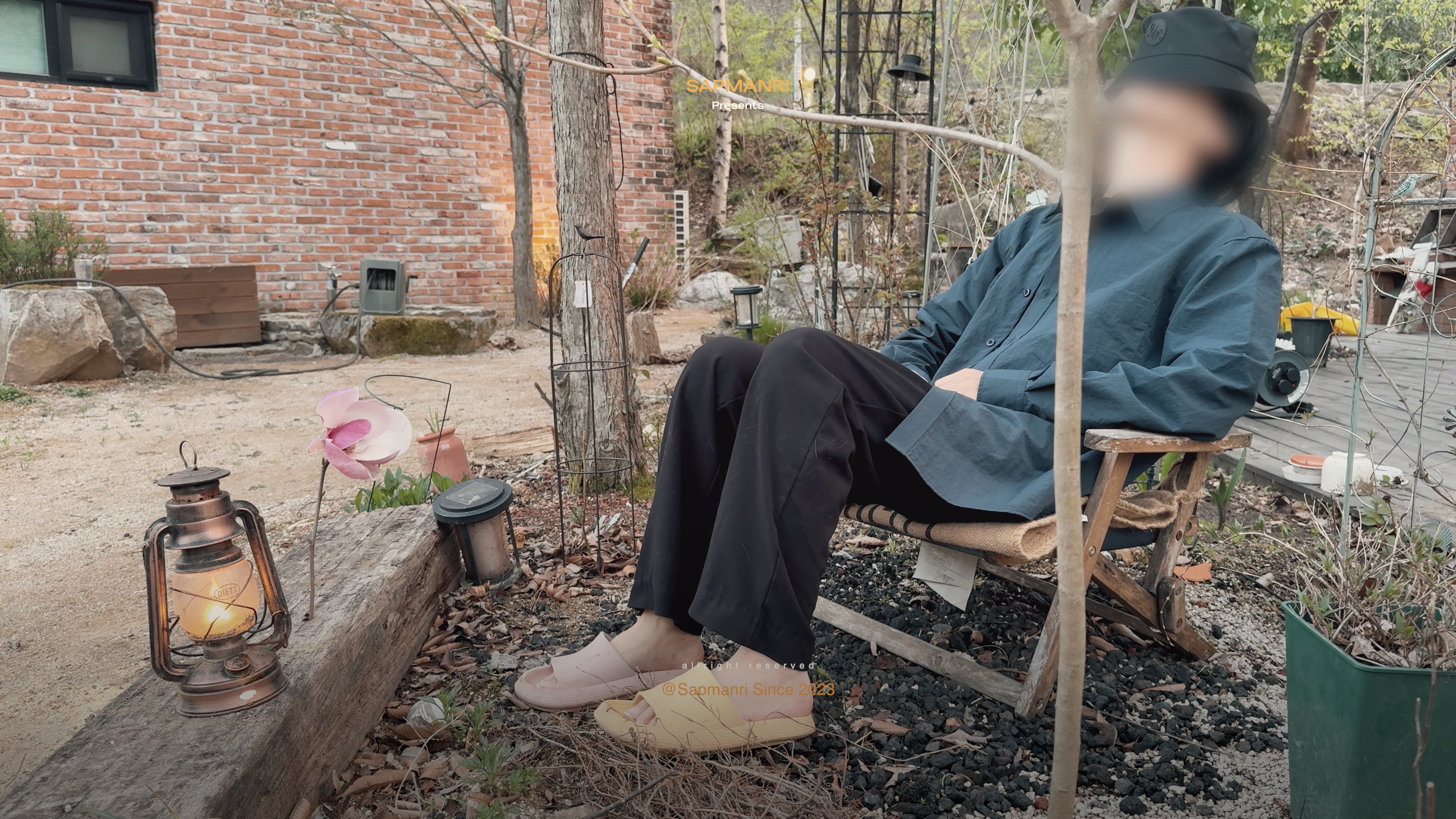
By evening, the border had become one small line among plants, furniture, flowers, and lantern light. It did not transform the whole yard. It gave one bed an edge and gave fallen wood another season of use.
The result was modest. We carried branches, cut them down, placed a low border, and sat outside while the first warm days were still new enough to notice.