Two drip brews leave a surprising amount of wet coffee grounds. I used to treat every reuse idea as a small victory over waste. After trying several, I learned that “reusable” is not the same as useful, safe, or suitable for every home.
What works for us is modest: mixed compost for most grounds and, occasionally, a fully dried open bowl when we simply like the coffee scent.
Begin with the wet material you really have
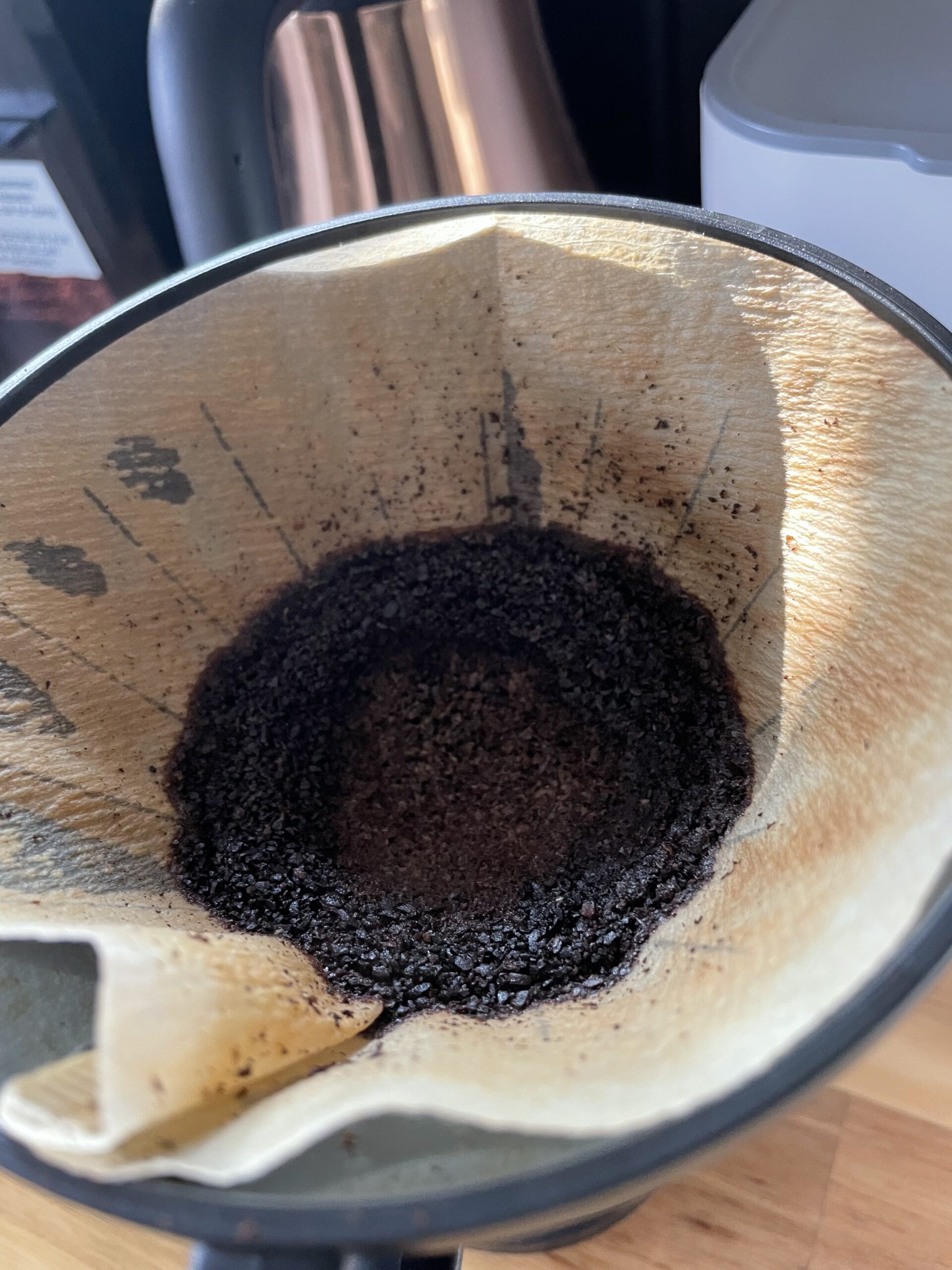
Grounds leave the brewer wet. If I want them for a dry, non-food experiment, I spread a small amount thinly in a ventilated place and wait until it is dry throughout. The time is not always one day; humidity, depth, and airflow change it.
A musty smell or visible unwanted growth is a reason to stop using that batch indoors. Wet grounds should not be sealed in a decorative pouch and forgotten.
The most straightforward route is compost
Our most defensible reuse is adding a modest amount to a mixed compost system, not treating grounds as a complete fertiliser. Oregon State University Extension's current coffee-ground guidance says they can be useful in compost and soil when used with restraint, and warns that excess direct application can interfere with plant growth.
That changes how I describe our practice. I no longer recommend pouring a layer into a houseplant pot or scattering it repeatedly around one bed. A compost pile combines the grounds with other materials and gives the mixture time to break down.
A scent bowl is an experiment, not an odour claim
I have placed thoroughly dried grounds in a small open container because I like the coffee scent. I cannot show that this removes bathroom, refrigerator, or shoe-cabinet odours, so I make no deodorizing claim.
If tried for scent, the grounds stay dry, open to inspection, away from food, children, and pets, and are discarded when the smell changes. It is not a substitute for cleaning, ventilation, or finding the source of an odour.
Keep grounds out of the drain
Reuse does not need to be elaborate. Sometimes the correct next destination is the compost bin or ordinary waste. What I avoid is washing a mass of grounds down the sink. They do not dissolve, and moving them out of sight is not the same as disposing of them well.
Why we do not use grounds as a candle additive
Mixing dried grounds into soy wax may add texture, but it is not a household method we recommend or publish as an instruction.
The National Candle Association reports that flammable botanical material embedded near a candle's flame can become part of the liquid wax pool and sustain flame. Coffee grounds are also combustible organic material. Without a tested candle design, wick, container, and burn protocol, “mix grounds into wax” is not responsible advice. See the association's botanical candle fire-hazard report.
Our current decision table
| Destination | Current decision | Reason |
|---|---|---|
| Mixed compost | Use modestly | Combines grounds with other material and allows decomposition |
| Directly in a pot | Not a default practice | Too much can affect soil and plant growth |
| Dry scent bowl | Optional experiment | Pleasant scent, but no claim that it removes odours |
| Candle additive | Do not recommend | Combustible inclusions near flame require tested design |
| Sink drain | Avoid | The particles do not dissolve |
The quieter lesson was not that every leftover must become a craft. It was learning to choose the next use only when it is genuinely safer and more useful than disposal.