This project worked because of one detail in the bag we already owned: its two handles were knotted through attachment points rather than stitched into a seam. I could undo them, join their ends, and use the same material as a longer strap.
Nothing was cut, sewn, or added. That makes the change reversible, but it does not make the method suitable for every tote. The first step is inspection, not untying.
1. Check whether the handles are actually removable
Look at every place where a handle meets the bag. This method needs ends that can be released from a grommet, eyelet, loop, or similar attachment point. If a handle disappears into a stitched seam, stop. Cutting that handle would turn this into a different project requiring new hardware and sewing.
2. Check length and condition before changing anything
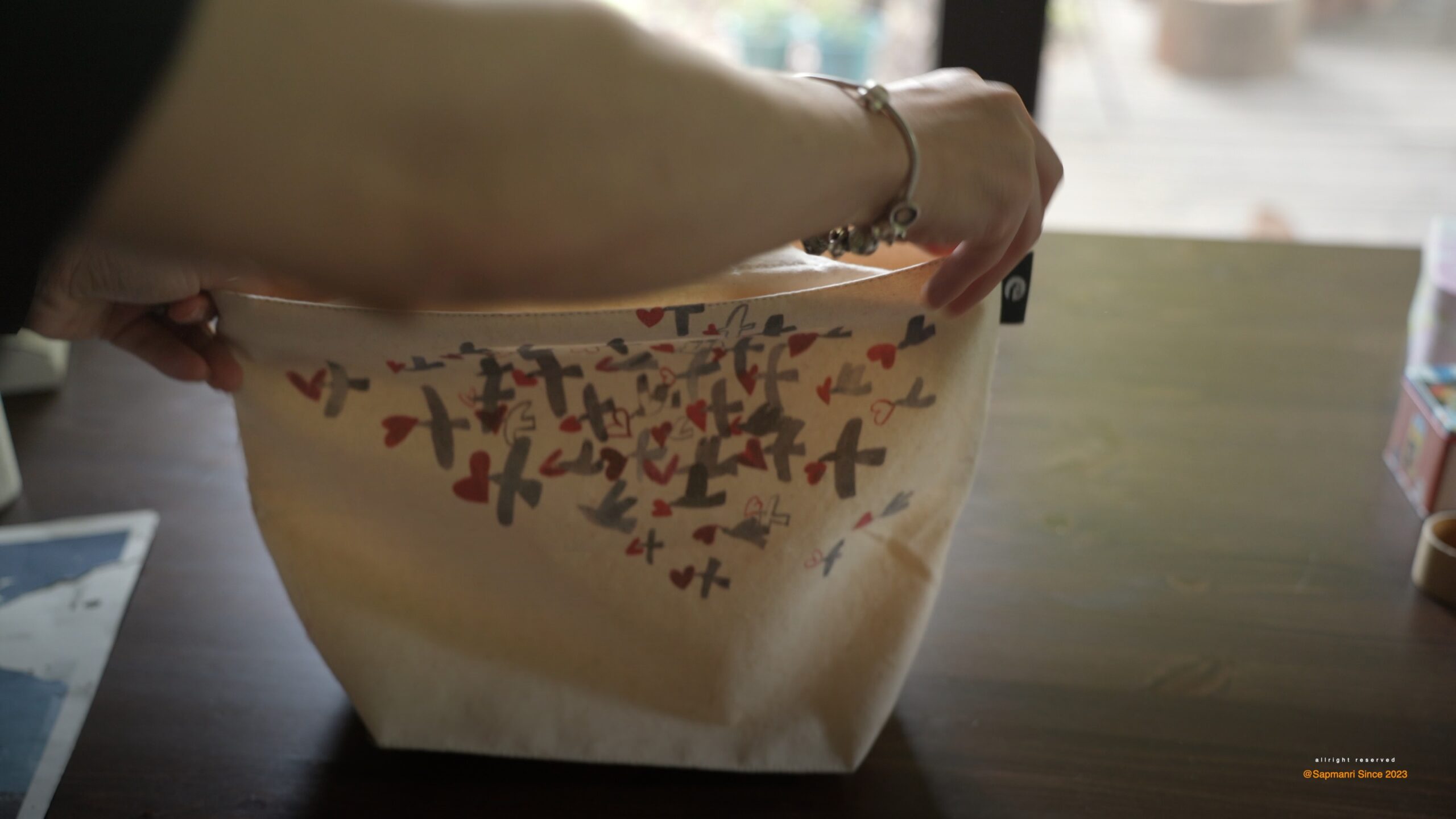
Two removable handles are not automatically long enough for a crossbody strap. Hold or loosely join them first and check whether the combined length reaches from one side of the bag, across your body, to the other side without pulling the bag too high.
Also inspect the fabric, attachment holes, and old knots. Fraying, stretched eyelets, or a handle that already feels weak are reasons not to load the bag this way.
3. Record the original knots, then loosen them
Before untying anything, take a photograph of each original attachment. It gives you a reference if you decide to turn the bag back into a tote. I then worked the four knots loose without cutting or enlarging the holes.
If a knot cannot be loosened without damaging the handle, reversibility has already been lost. That is another sensible place to stop.
4. Join the handles and set the drop
I joined the free end of one handle to the free end of the other. The two short handles then behaved as one long strap running from one side of the bag to the other.
The join determines where the bag sits. Tie it loosely, put the empty bag on, and adjust before tightening. Check that the knot does not press painfully against the shoulder or sit where it will rub against clothing.
5. Test the empty bag before adding weight
A knot that looks secure on a table can shift when the strap is pulled diagonally across the body. I tested the bag empty, walked with it, and checked the join and all four attachment points again.
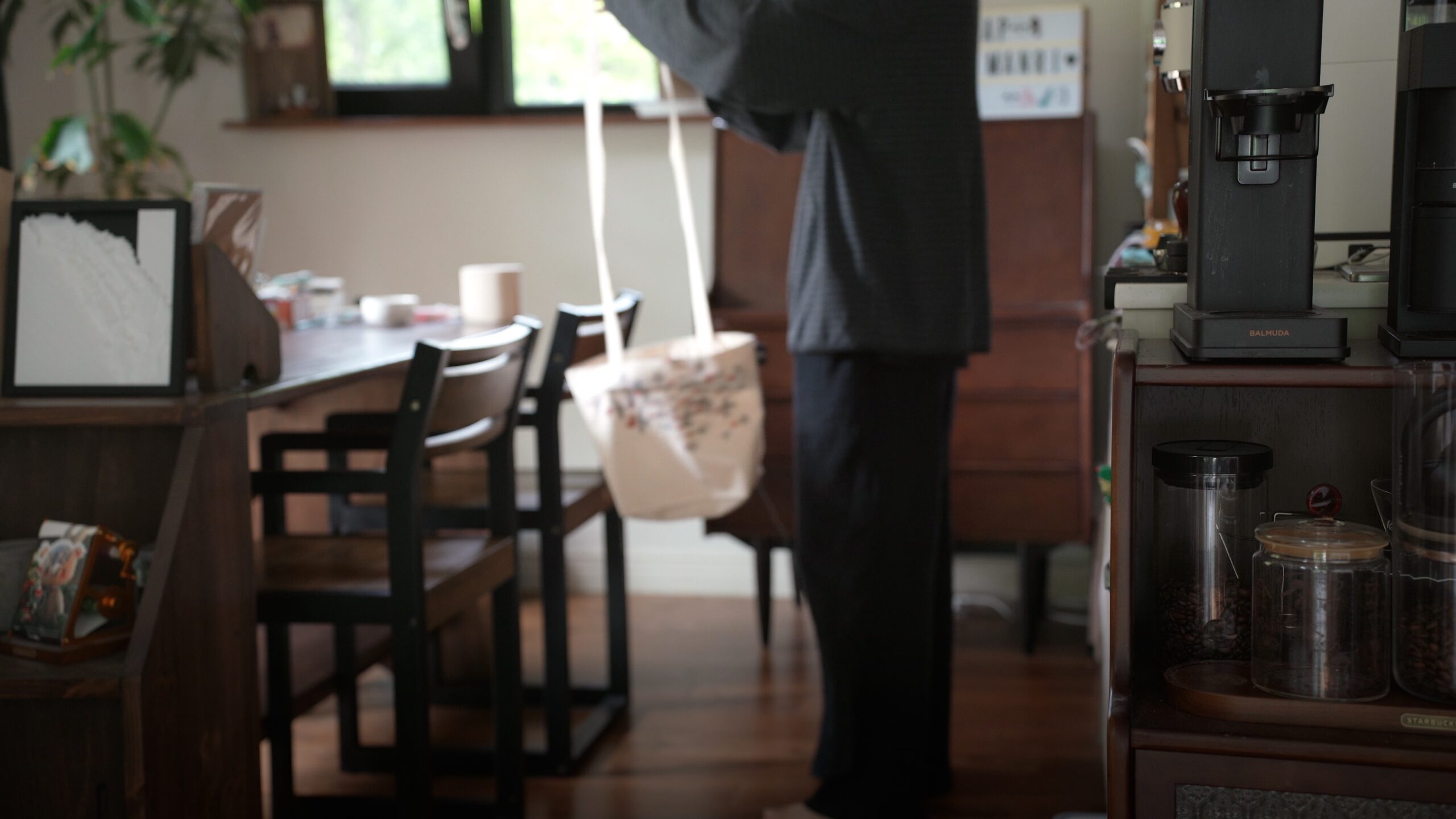
Only after that should light contents be added gradually. This is a casual reuse project, not a load-rated strap. I would not use an untested knot to carry a laptop, camera, glass bottle, or anything whose fall could cause injury or serious loss.
6. How to return it to a tote
Untie the joining knot and use the reference photographs to restore the original handle arrangement. Because this particular bag was not cut or punched, the basic form can be restored.
Reversible does not mean wear-free. Repeated untying can soften a knot, stretch a hole, or mark the fabric, so inspect it again before carrying the bag by its short handles.
When this method should be skipped
- The handles are stitched permanently into the seam.
- The combined handles do not reach comfortably across the body.
- The fabric, eyelets, loops, or handles show wear.
- You cannot make and inspect a secure join.
- You need the bag to carry heavy, fragile, or valuable items.
The useful idea is not that every tote can become a crossbody bag. It is that one specific construction allowed the material already present to do another job, without pretending the result was stronger than the original bag.