This entry was published on April 25, 2026. The photographs preserve one planted coffee sack and an amber iced drink, but nothing that establishes ube, milk, or a purple latte.
This is not a beverage review or a complete planter tutorial. It is an April afternoon moving from a flower and distant ridge to one small reuse experiment on the deck.
The day opened at flower height
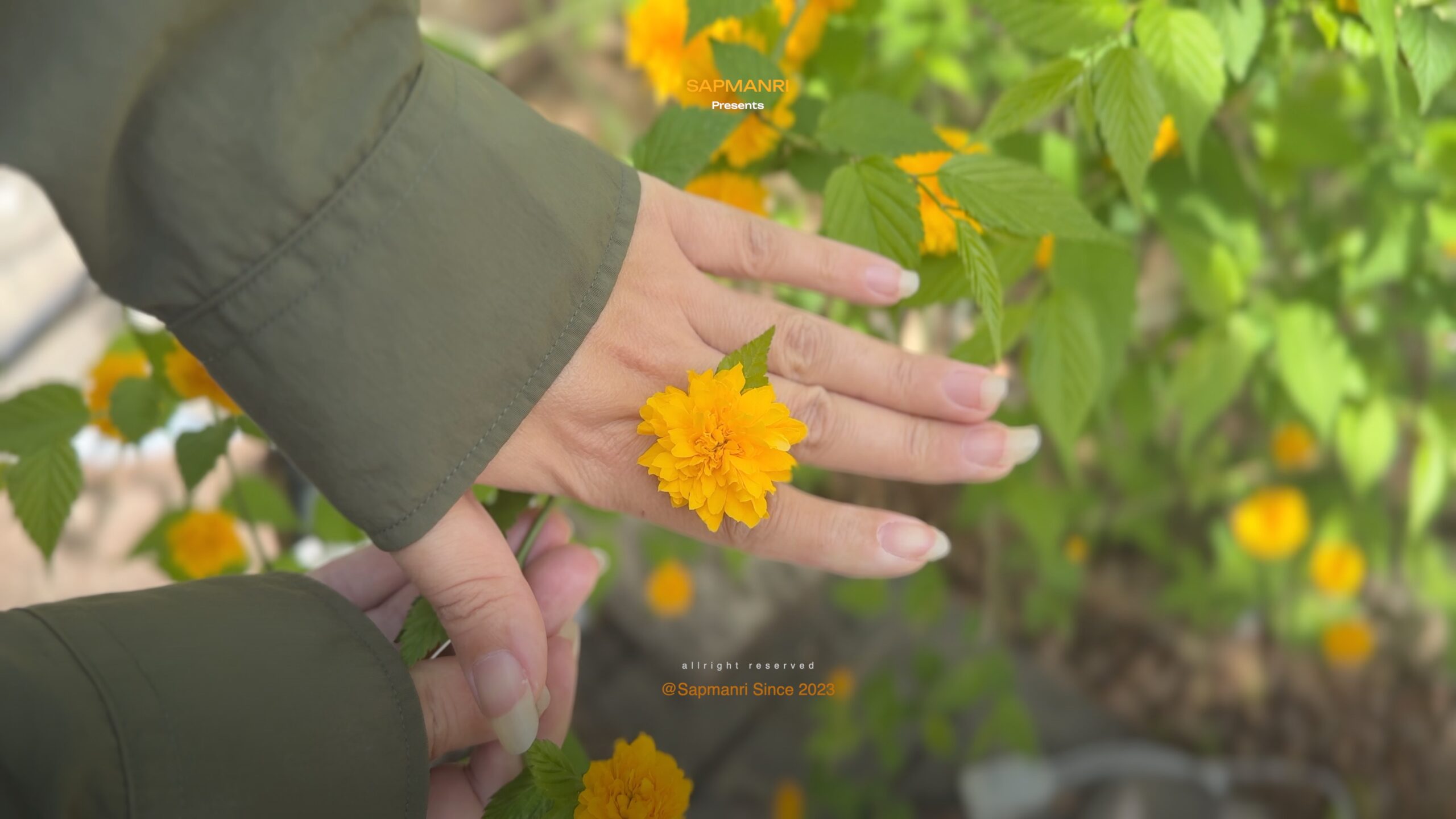
The hero photograph shows a hand curved around a yellow bloom without picking it. No species label survives with the image, so the flower remains unnamed here. The gesture is enough: the camera moved close before it moved outward.
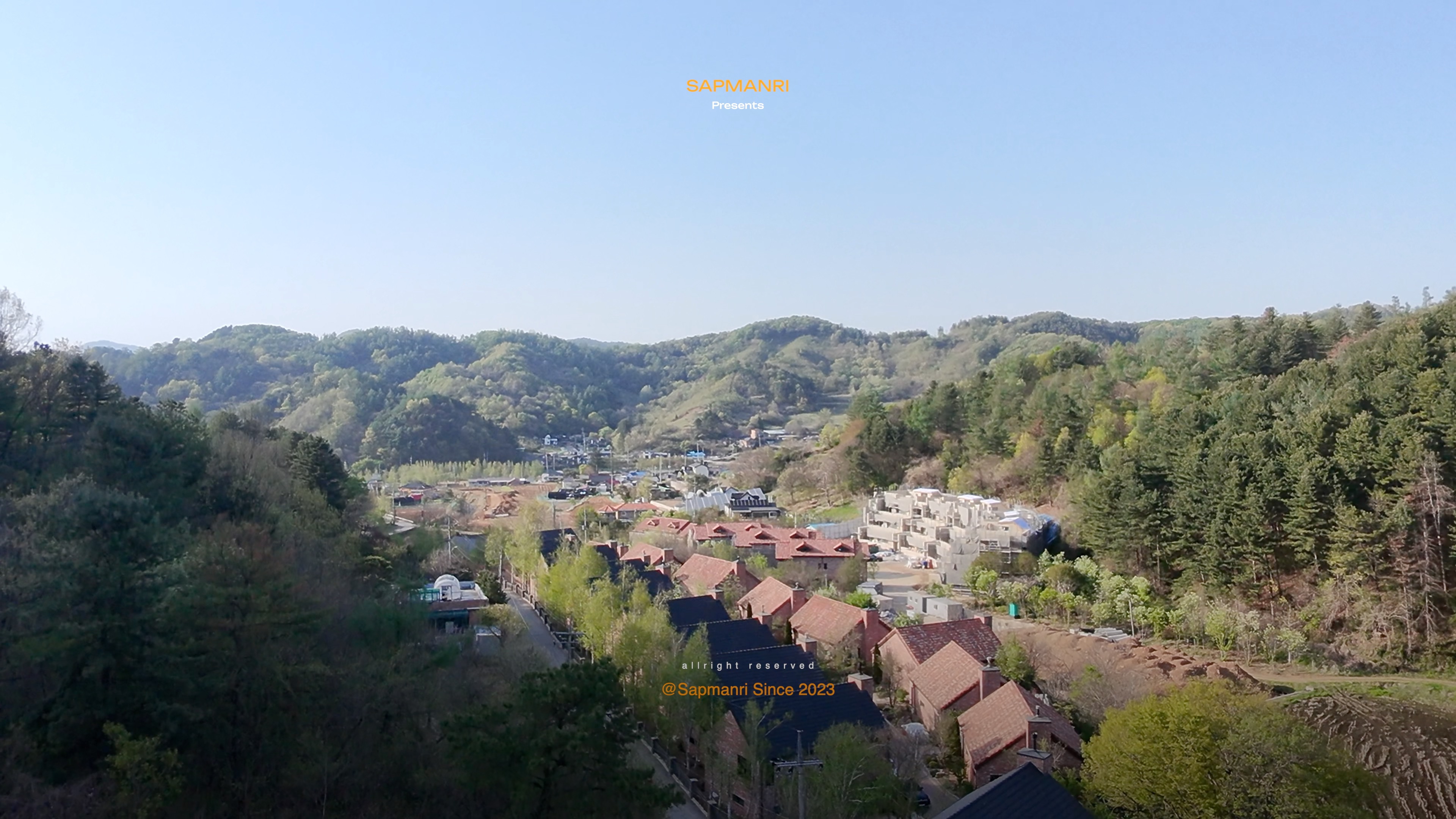
From above, the village sits between fields and forest. The photograph does not establish the exact viewpoint or trail, and this article does not turn it into directions. It records the scale change that made the afternoon feel spacious.
Clouds moved above the darker mountains
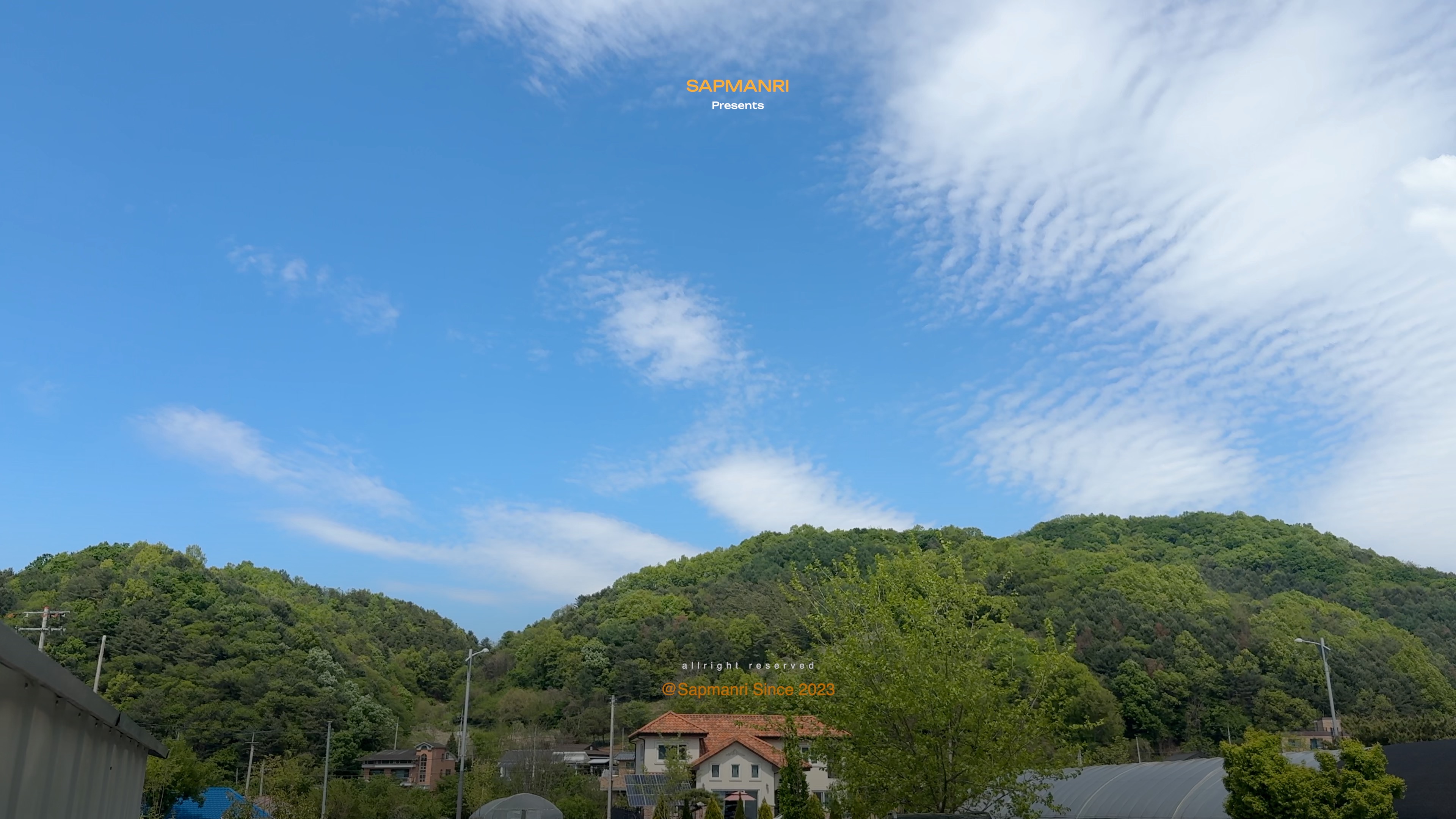
The mountain frame gives more space to clouds than land. It is tempting to attach a large lesson to a view like this, but the archive needs less. The weather had opened, the ridges receded in layers, and we stopped long enough to photograph them.
One used sack became an outdoor container
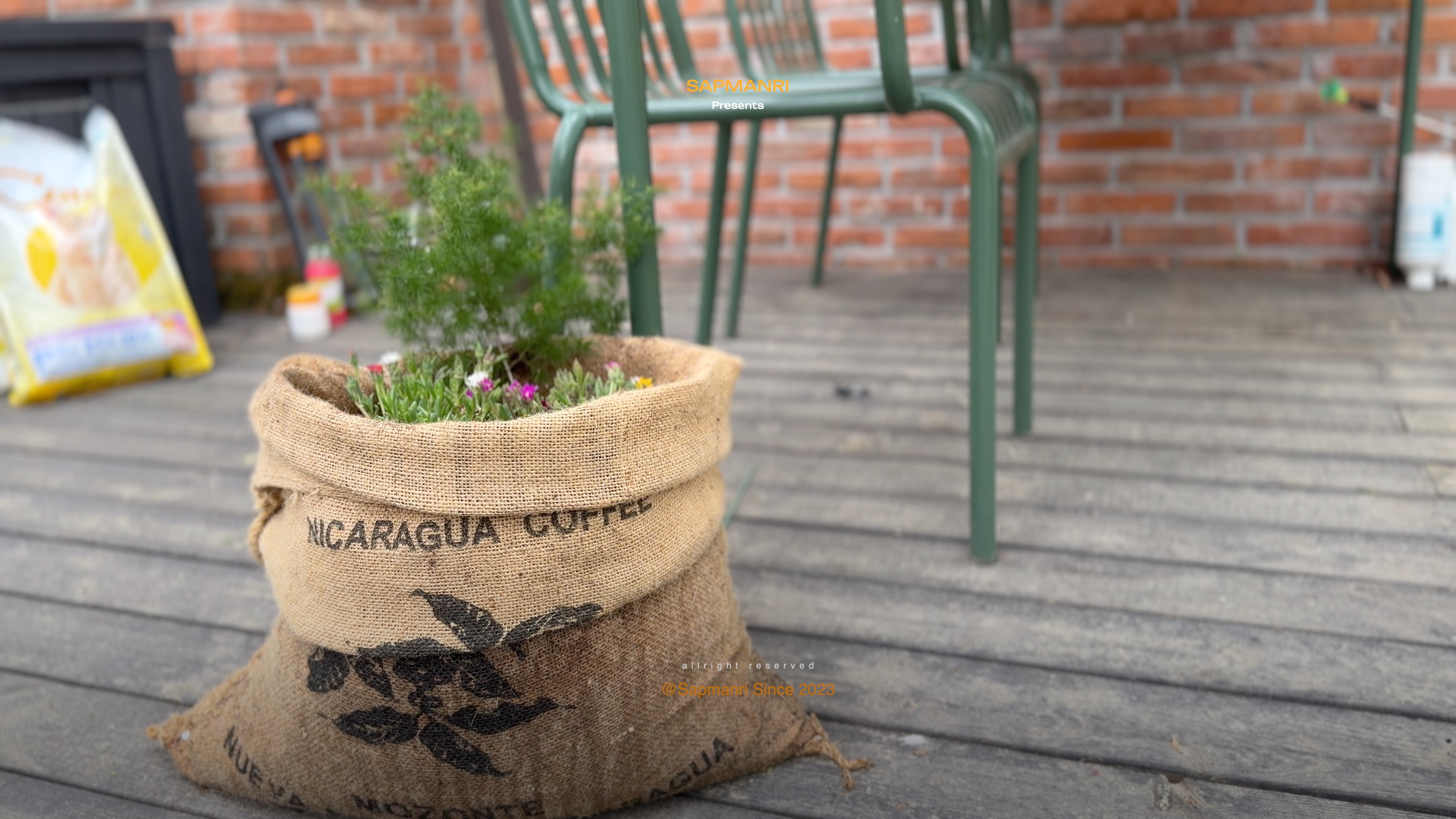
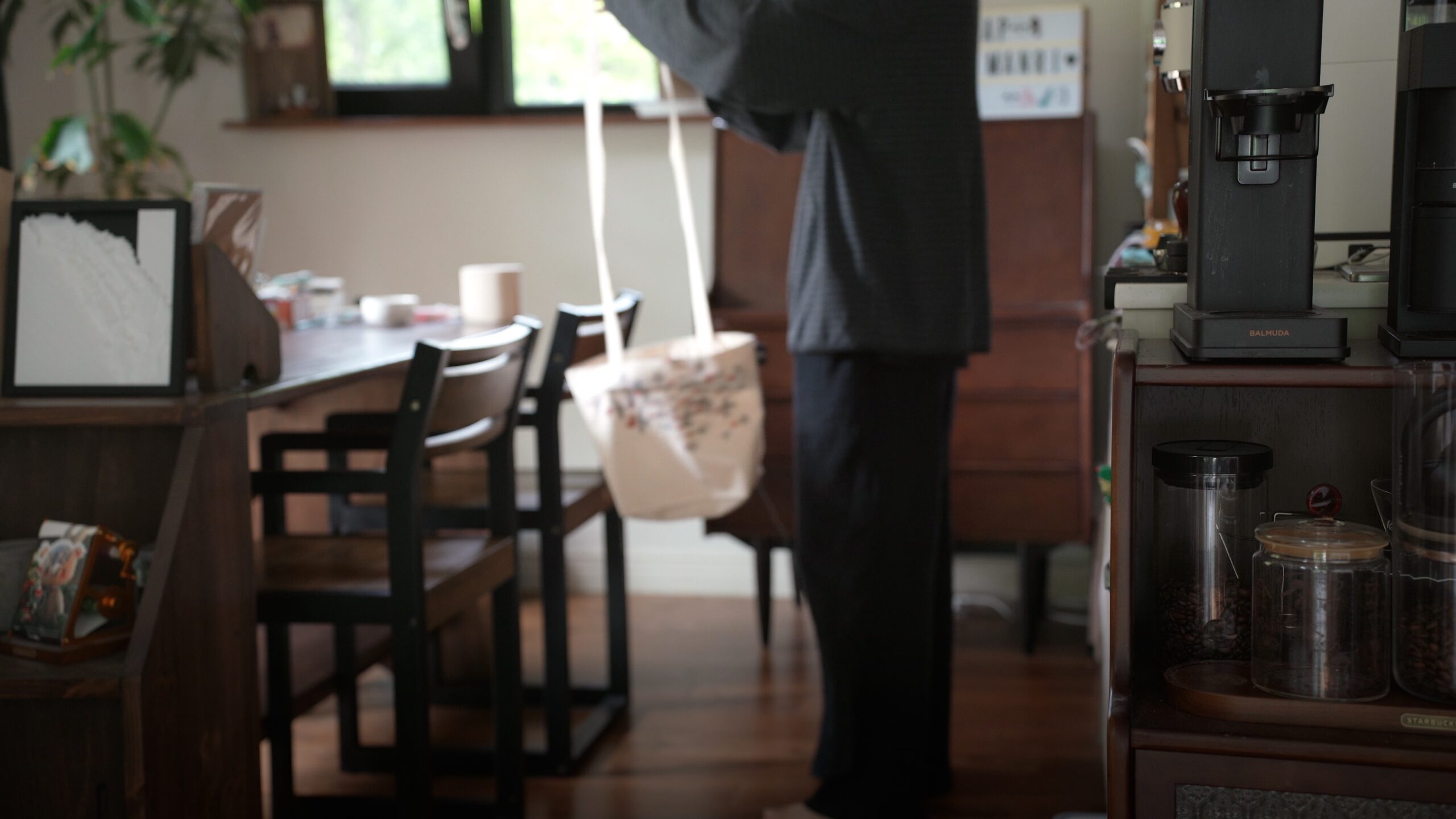
The printed burlap sack had previously carried coffee and later held flowering plants. In our household note, the sack came from a nearby cafe, was used without a plastic liner, and allowed water to drain through the weave. We kept it outdoors and expected the natural fibre to weather rather than last permanently.
That experience is not a universal construction rule. Sack fibres, seams, dyes, and previous contents vary. Anyone repeating the idea should confirm the sack's provenance, avoid using an unknown industrial container for edible crops, and keep drainage water away from indoor floors or surfaces that stain.
What we would check before repeating it
- Inspect the seams and base before filling; wet soil becomes heavy.
- Use the sack as a decorative container, not as a structural or hanging load.
- Place it where drainage is expected and where a softening base will not create a trip hazard.
- Check regularly for mould, tearing, sagging, and exposed wire or fasteners.
- Move the plant to a sound container before the burlap fails.
Our note says the sack remained usable for roughly a year. That is one observation in one climate and position, not a guaranteed service life.
The drink was amber, not purple
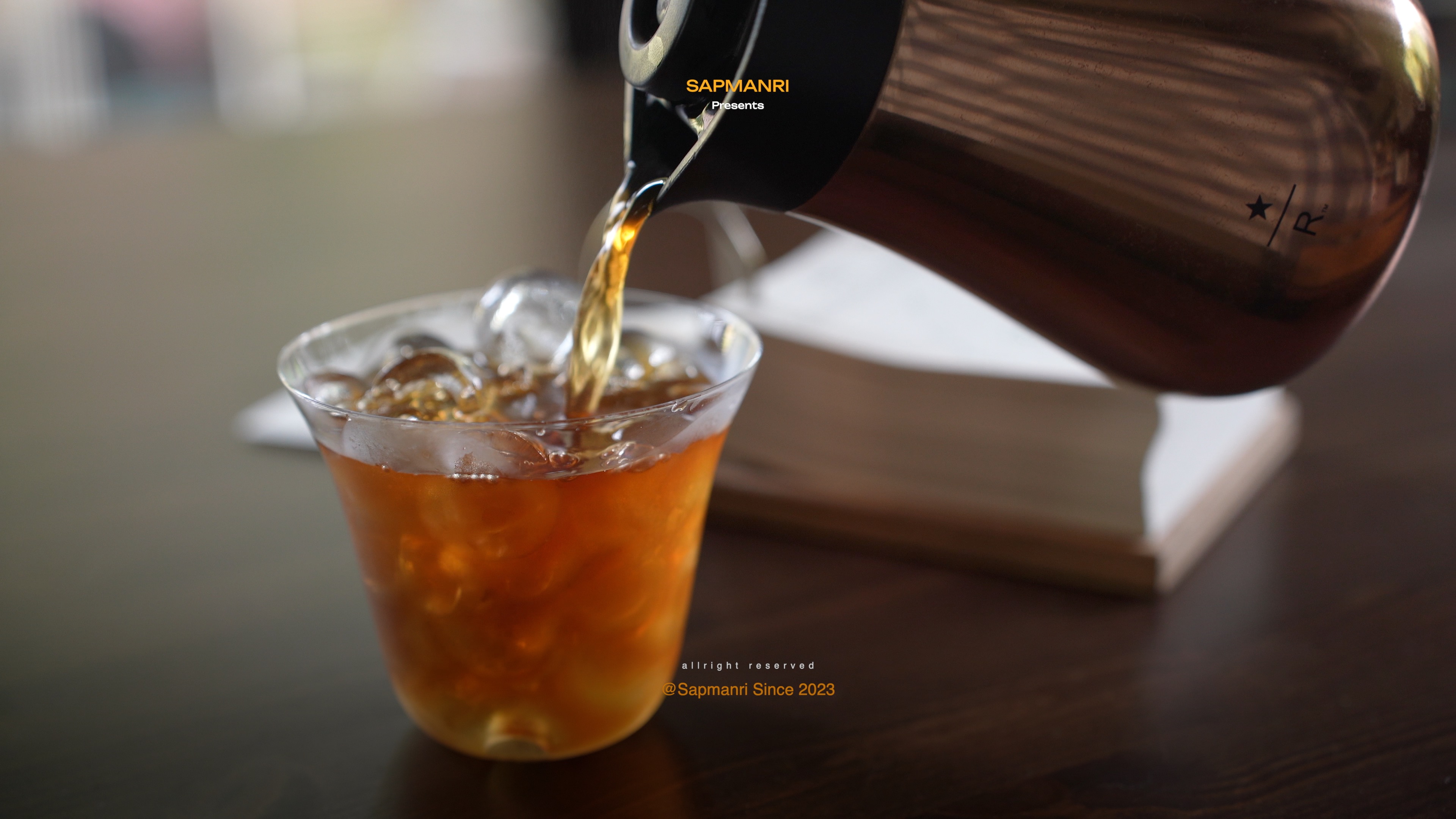
The final photograph shows ice, a glass, and an amber liquid poured from a carafe. Calling it an ube latte would require evidence the image does not provide. We therefore leave the drink unidentified instead of turning colour and context into ingredients.
The afternoon remains coherent without the claim: a close flower, distant ridges, a reused coffee sack, and a cold drink on the deck. Reuse did not need to become a perfect sustainability story. One object simply stayed in use a little longer, in a form we could see every day.