This entry was published on February 28, 2026. The photographs preserve two connected pieces of the day: the preparation of a branch for a floor lamp and hands mixing spring cabbage with seasoning.
The attached archive keeps the branch, light, and cabbage that can still be inspected. It does not establish coffee, a complete bibimbap, strawberries, or chocolate fondue as part of this dated sequence.
The finished light came first in the archive

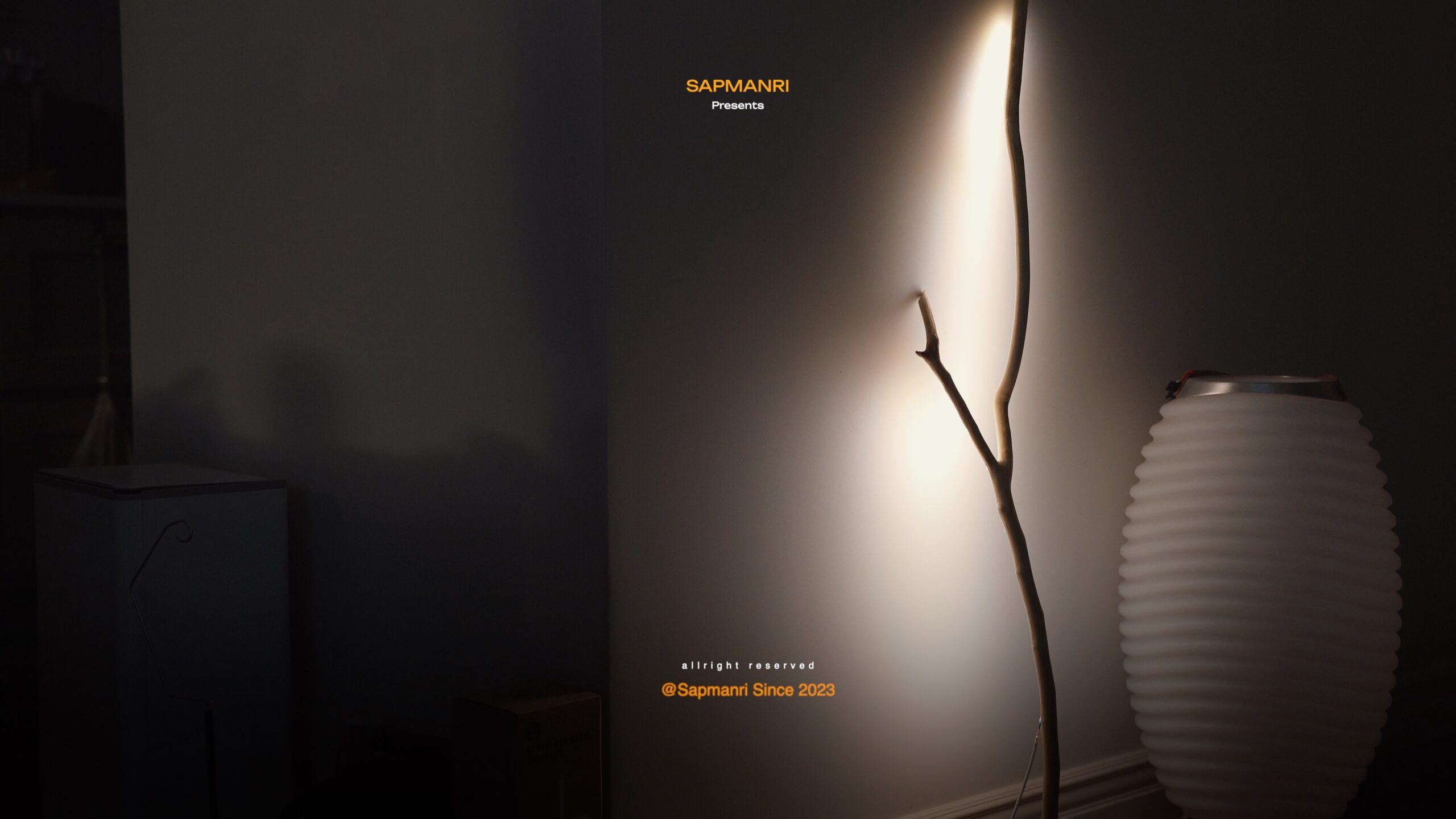
The opening frames show the result before the work: a tall pale branch standing near a wall, with warm light gathering around it. The branch's forks become a second drawing in shadow. It is a floor light because of its placement and scale, not because the wood itself has been turned into an electrical conductor.
The branch was cleaned outdoors
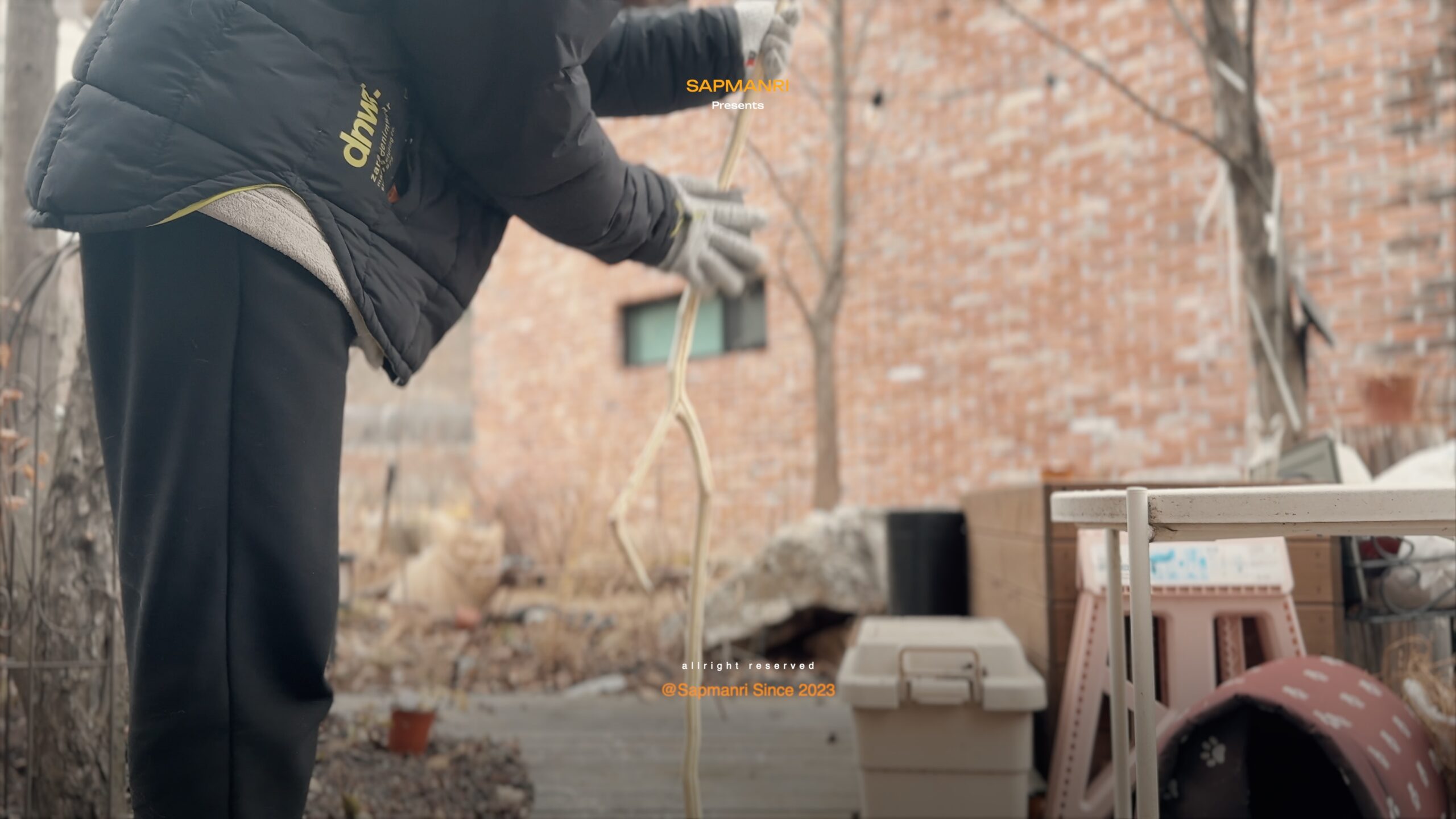
A gloved hand works along the branch, removing loose material and revealing a cleaner surface. We cannot determine the tree species, drying time, or exact tools from the frame. Those missing facts matter, because fresh, insect-damaged, rotten, or chemically treated wood may not be appropriate for an indoor object.
This page is therefore a design diary, not a material-selection specification.
A pale coating made the irregular line easier to see

The next photograph shows a pale coating being brushed over the stripped surface. The archive does not preserve the product label, so we do not name the paint, finish, drying time, or indoor-safety rating. Anyone repeating the surface treatment needs to follow the actual product instructions for ventilation, protective equipment, drying, and disposal.
The installed object remained visibly a branch
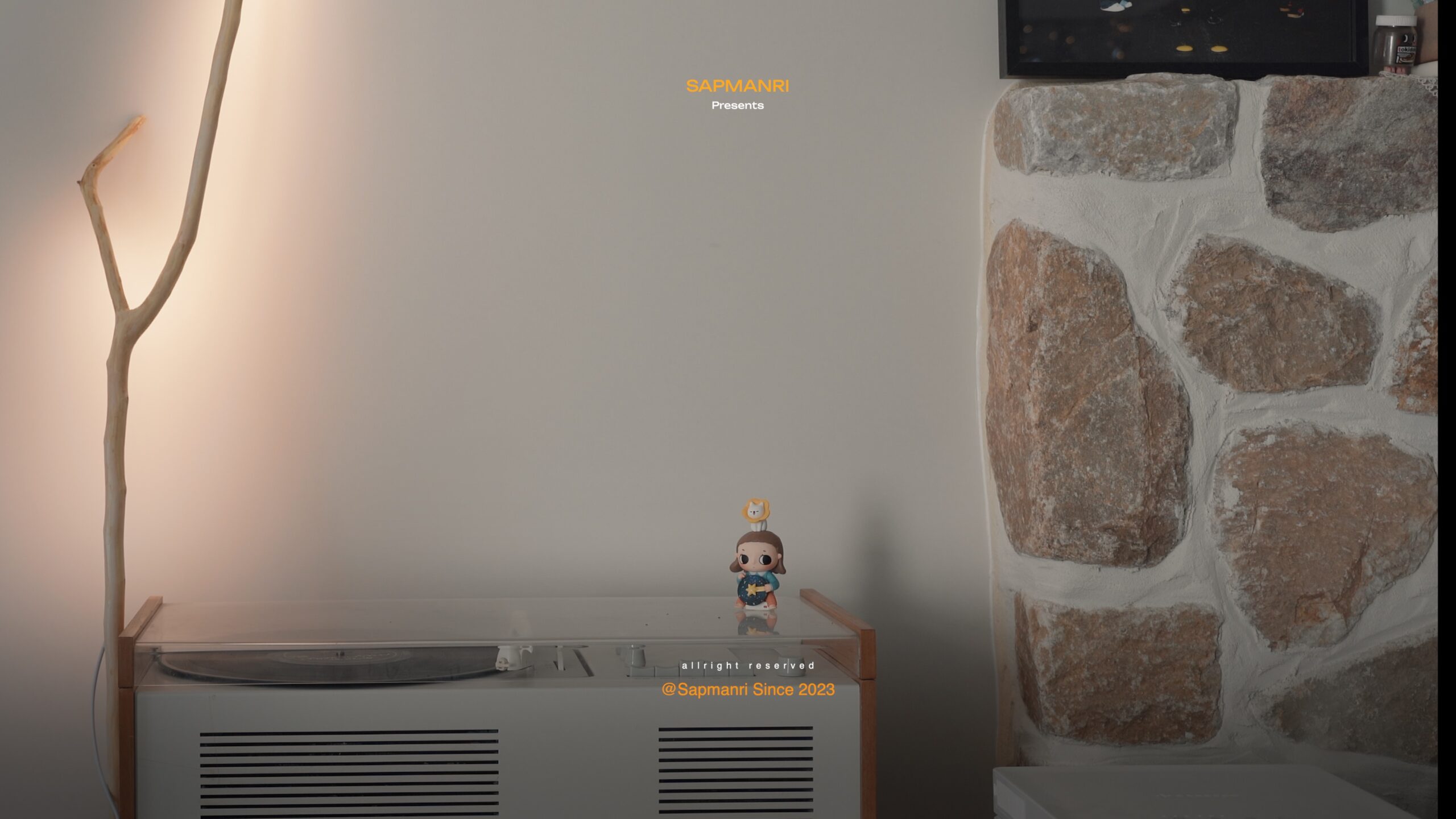
The installed branch retains bends, knots, and asymmetry. A conventional floor lamp tries to disappear into a clean vertical line; this one keeps the material's history visible. Its value is not that it produces more light. It gives a small area of the wall a distinct evening atmosphere.
This is not a wiring tutorial
The photographs do not document the socket, cable routing, strain relief, switch, plug, bulb rating, or internal connections. We will not invent those steps. For a similar object, use a listed, ready-made lamp assembly exactly as its manufacturer directs or have the electrical work completed by a qualified professional.
The Electrical Safety Foundation International's home-safety guidance recommends inspecting electrical devices and wiring, using properly certified equipment, and replacing damaged cords. Keep the bulb and electrical parts within their rated clearances, use only a manufacturer-approved lamp and bulb combination, stabilise the base against tipping, and unplug the lamp before adjustment. Wood must never press against a hot bulb or exposed connection.
Spring cabbage closed the day in the kitchen

The final photograph moves from pale wood to a stainless-steel bowl. Hands fold chopped spring cabbage through a red seasoning. There is no rice or finished bowl in the frame, so calling the dish bibimbap would go beyond the evidence.
What joins the two parts of the day is not a recipe theme. It is work done by hand: cleaning, brushing, placing, then mixing. By evening, the branch changed the wall and the cabbage changed the table. That is enough of the day to keep.