This entry was published on April 11, 2026. The photographs preserve something specific: an afternoon at Cheongju's Dongbu Warehouse and the fading light on the drive home.
The record stays close to what can still be inspected—a mural, low warehouse buildings, an outdoor book installation, and the road at sunset.
A former industrial site used as a cultural place
Dongbu Warehouse is not a decorative name invented for a new cafe complex. Official cultural records describe former tobacco-storage buildings that were regenerated as spaces for citizens, arts activity, education, and events. Current programmes and building access can change, so anyone travelling for a particular exhibition should check the official Dongbu Warehouse site before leaving.
The outdoor art set the scale
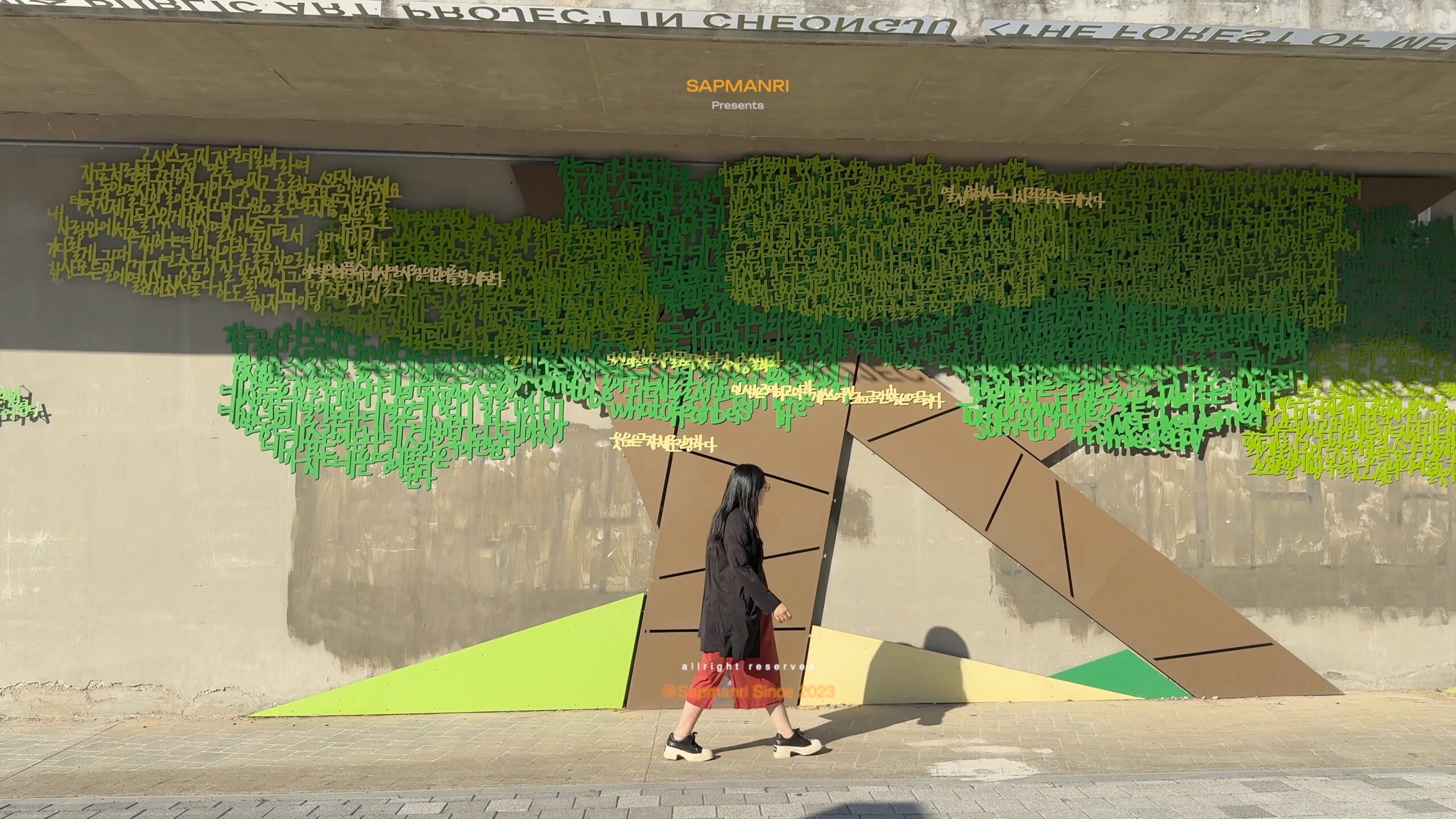
The mural stretched across a long wall. Green letter-like forms gathered above angular brown shapes, while a single walking figure made the installation's size visible. It was not an object we could understand from one close photograph; it needed the wall, pavement, shadow, and moving body in the same frame.
That scale is part of what an adapted warehouse can keep. The building's old dimensions remain available to new work without pretending the industrial past never existed.
Cafe C and the open yard
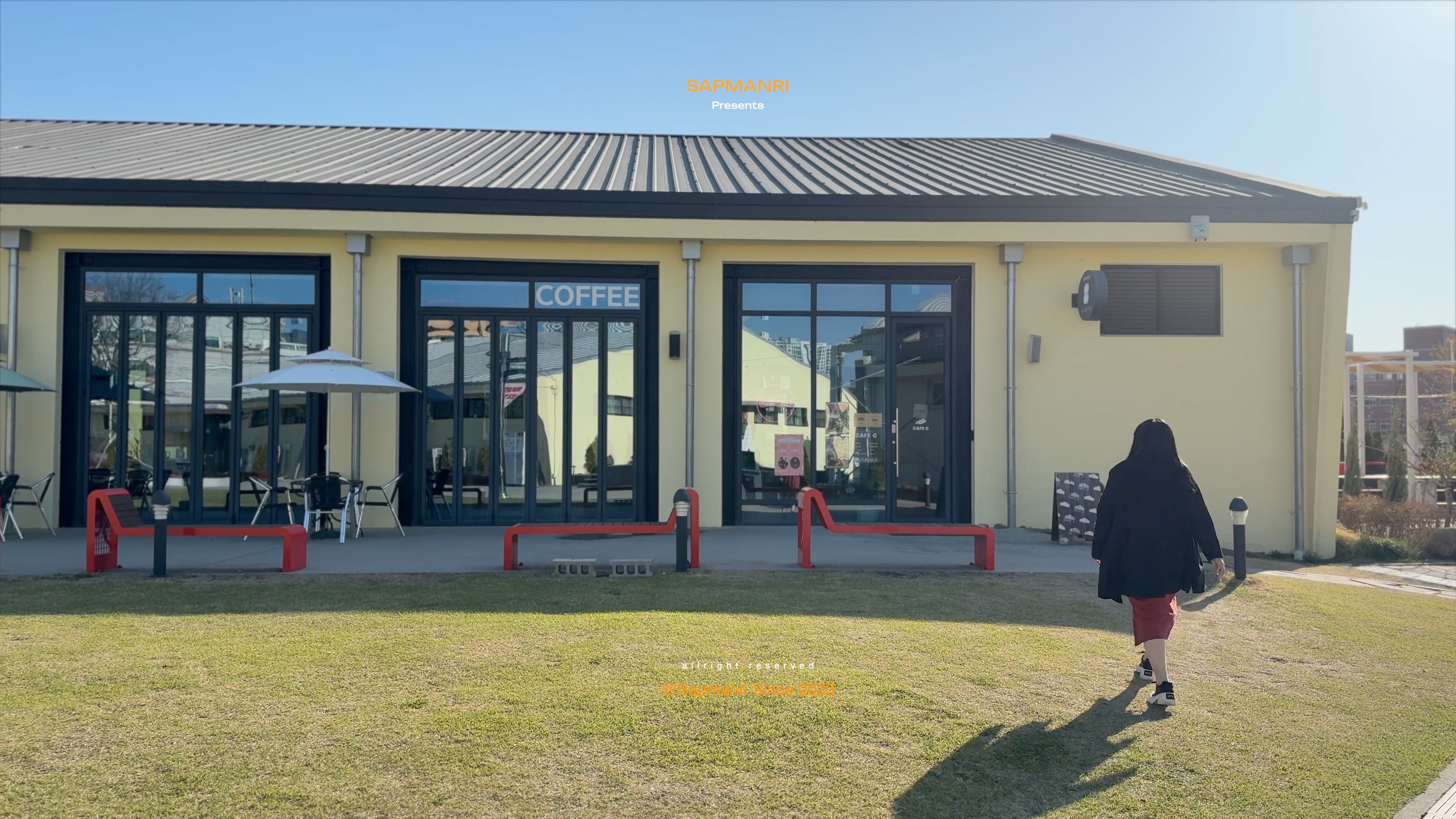
Another photograph shows a low yellow building, broad lawn, red benches, and the words Coffee and Cafe C on the doors. It records what was present on our visit; it does not establish today's tenant, menu, prices, or hours.
We therefore describe the cafe as part of that afternoon rather than promise that a reader will find the same arrangement. The useful planning source is the venue's current programme, not an old travel paragraph.
Books became part of the wall
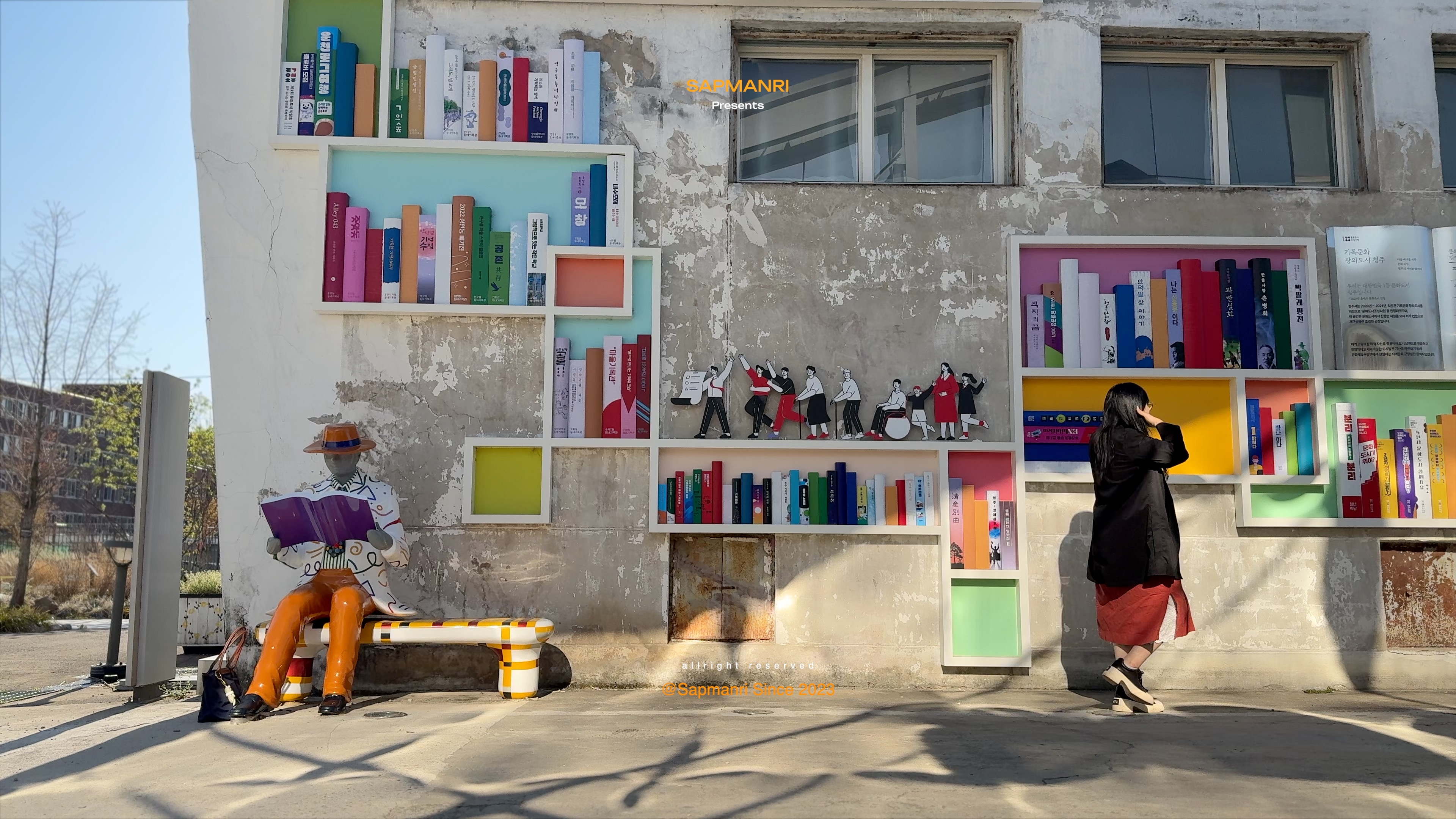
The most detailed frame is a weathered wall fitted with bright shelves and oversized book spines. A seated sculpture holds a book at one end while a visitor stands at the other. The installation allowed reading to appear as a public image rather than an activity hidden indoors.
The cracks and worn surface were not covered. Colour was placed around them. That relationship—new work beside visible age—is what stayed with us more clearly than any list of facilities.
What belongs to this dated visit
No attached photograph or dated note establishes a record-bar interior, a host choosing music, cherry blossoms, or a cat. Those may belong to another recording or another day, but they are not evidence for this visit.
What we can inspect is already enough: the scale of the mural, a cafe occupying one low building, books becoming part of an outdoor wall, and the last orange light beyond the highway barrier.
The last photograph was the road
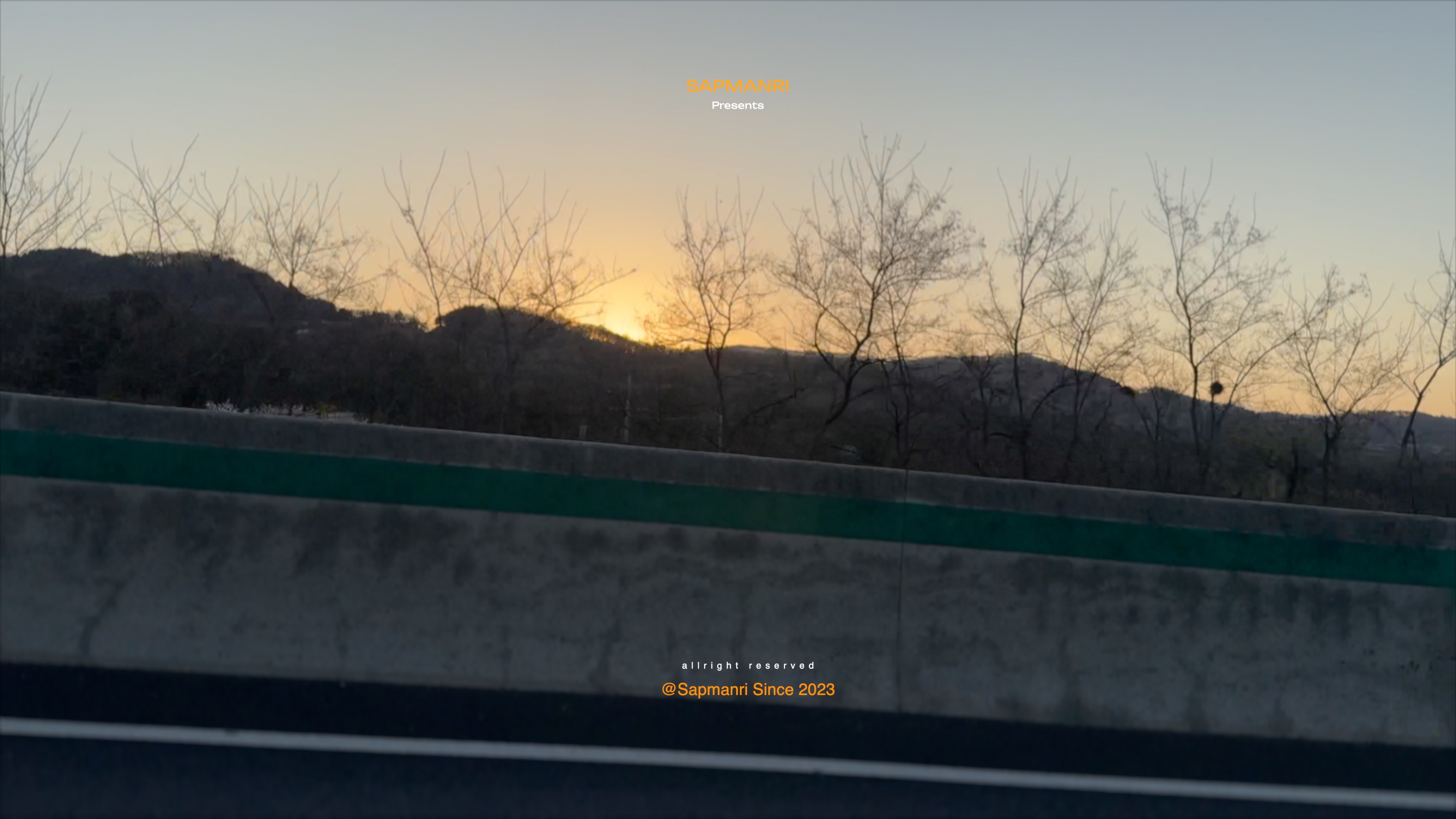
By the time we left, the day had narrowed to a low orange line behind bare branches. That unplanned frame completes the record better than a broad conclusion. We visited an old industrial site in a new civic life, looked at art and buildings, and watched the light disappear on the road.