This entry was published on June 20, 2026. The earlier English version opened with a tote-bag conversion, sweet corn, home-roasted coffee, berries, a picture book, and gathered branches. Most of those scenes are not present in the photographs attached to this page.
The surviving archive tells a different and more consequential story. It shows a brand-architecture diagram on a monitor, an early Sapmanri archive spread, hours of computer work, coffee beside the desk, a bowl of yogurt and berries, a Sapmanri page on screen, and one person leaving the room. Together, those frames record the day our scattered projects began to be viewed as parts of one larger structure.
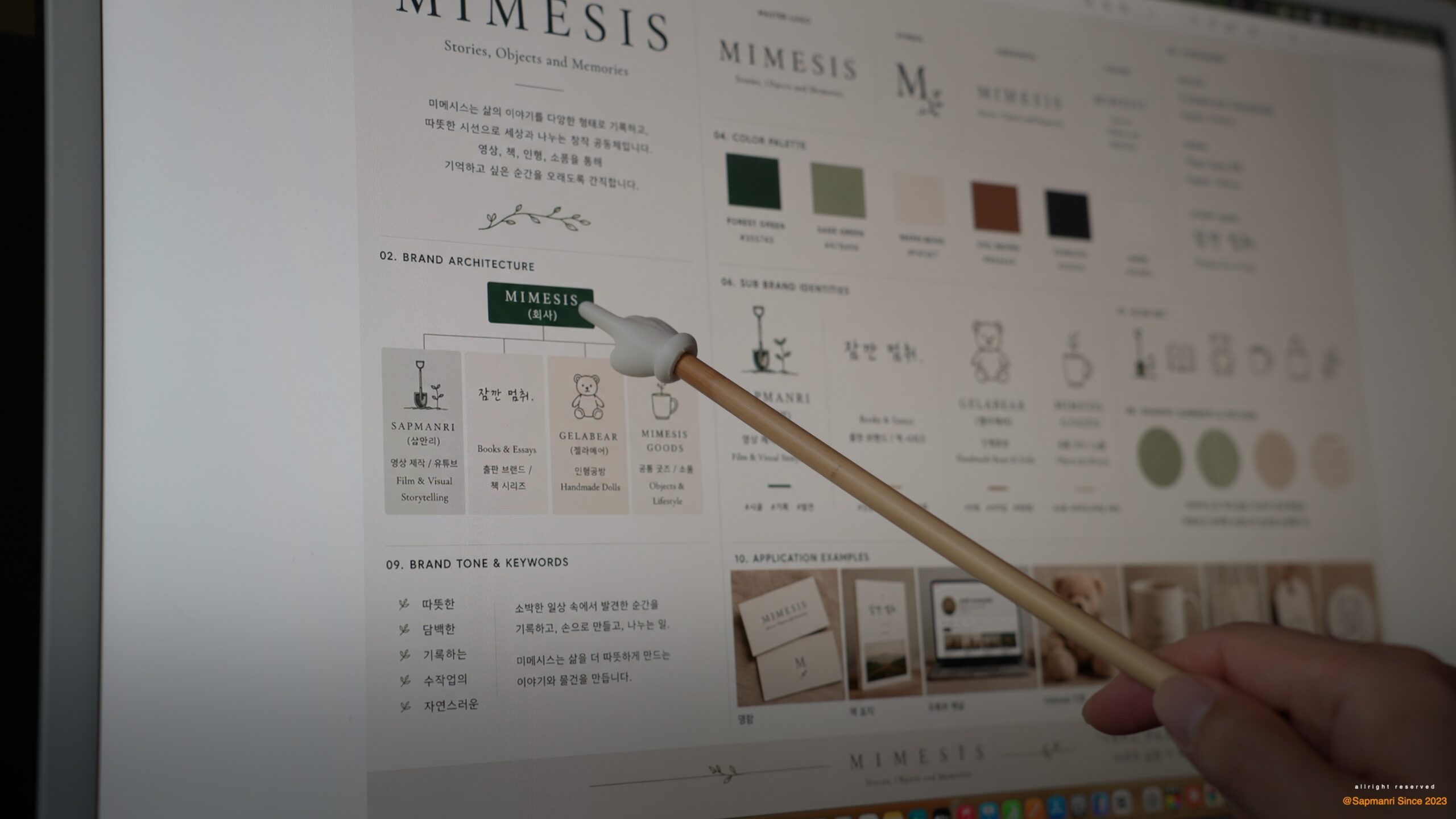
The screen held more than a logo
The first question was not how to draw another mark. It was how to describe the relationship among things that had been growing separately: Sapmanri's countryside record, books and essays, Pause, Gelabear, Mimesis Goods, and experiments that did not yet fit a single public category.
On the monitor, those names were arranged beneath MIMESIS. The diagram is evidence of a planning moment, not a promise that every label shown in June 2026 remains current. Projects can change, merge, or disappear. What the frame establishes is the decision to stop treating each output as an isolated hobby.
The archive was already teaching us what mattered
The black archive spread carried a Korean title that translates as “A Link Between You and Me.” That phrase explains the work more clearly than a corporate slogan could. The photographs, essays, tools, and small characters were different ways of carrying a private observation far enough that someone else could enter it.
This is also why the archive mattered before there was a settled company structure. It showed that the unit of work was not a product category. It was a noticed moment, edited into a form another person could hold, read, watch, or use.
Most of the day looked like desk work
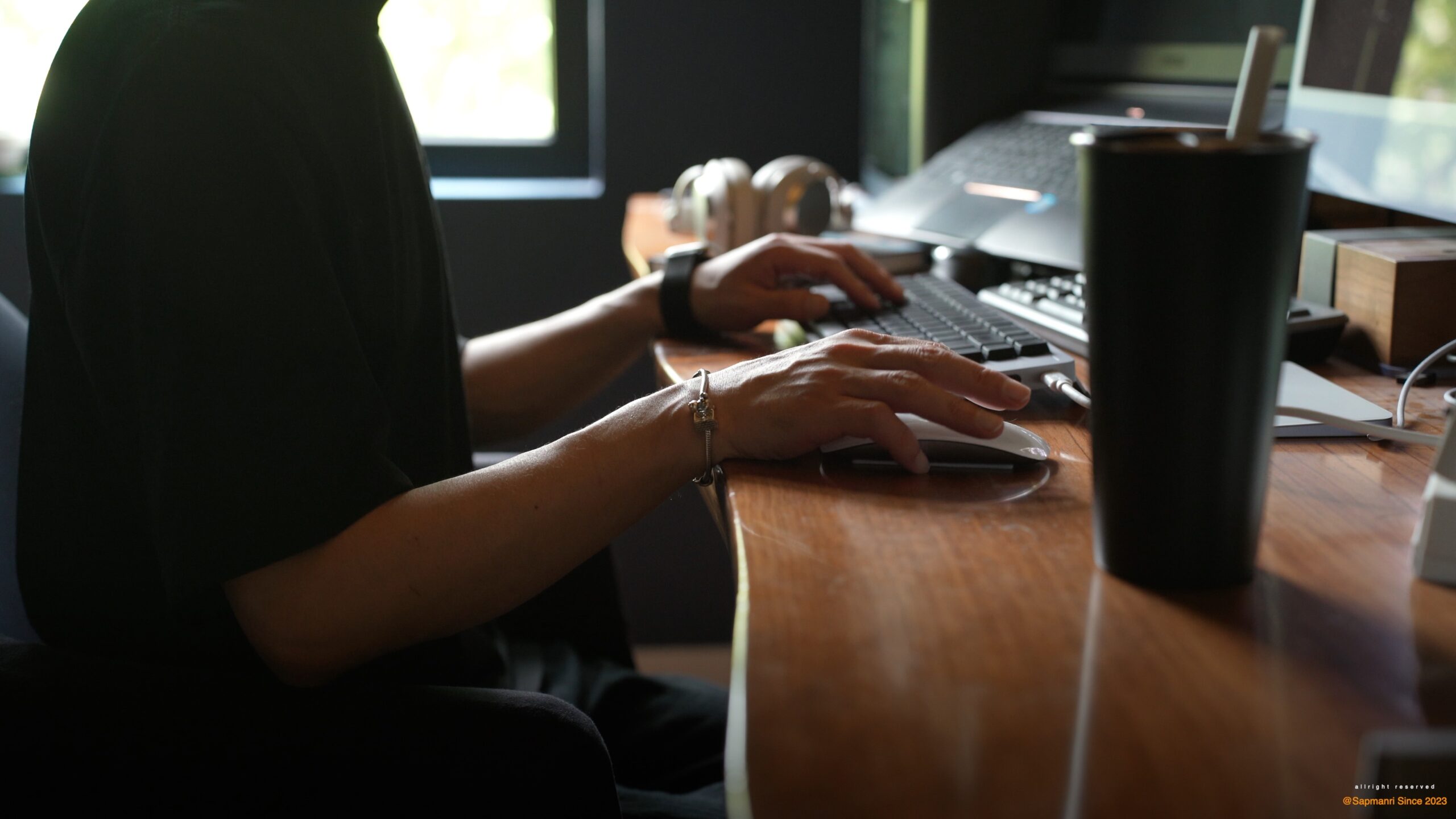
A brand diagram can make a day look decisive after the fact. The photograph beside it is less dramatic: a person at a desk, windows open on a large screen, cables and objects still occupying their usual places. Naming a structure meant comparing old files, moving words, and deciding which relationships were real enough to keep.
That distinction is important. MIMESIS did not arrive fully formed in one presentation. The screen captured a working hypothesis: perhaps the many things we had made were not distractions from one another, but evidence of the same practice seen from different sides.
Coffee and breakfast kept the scale human
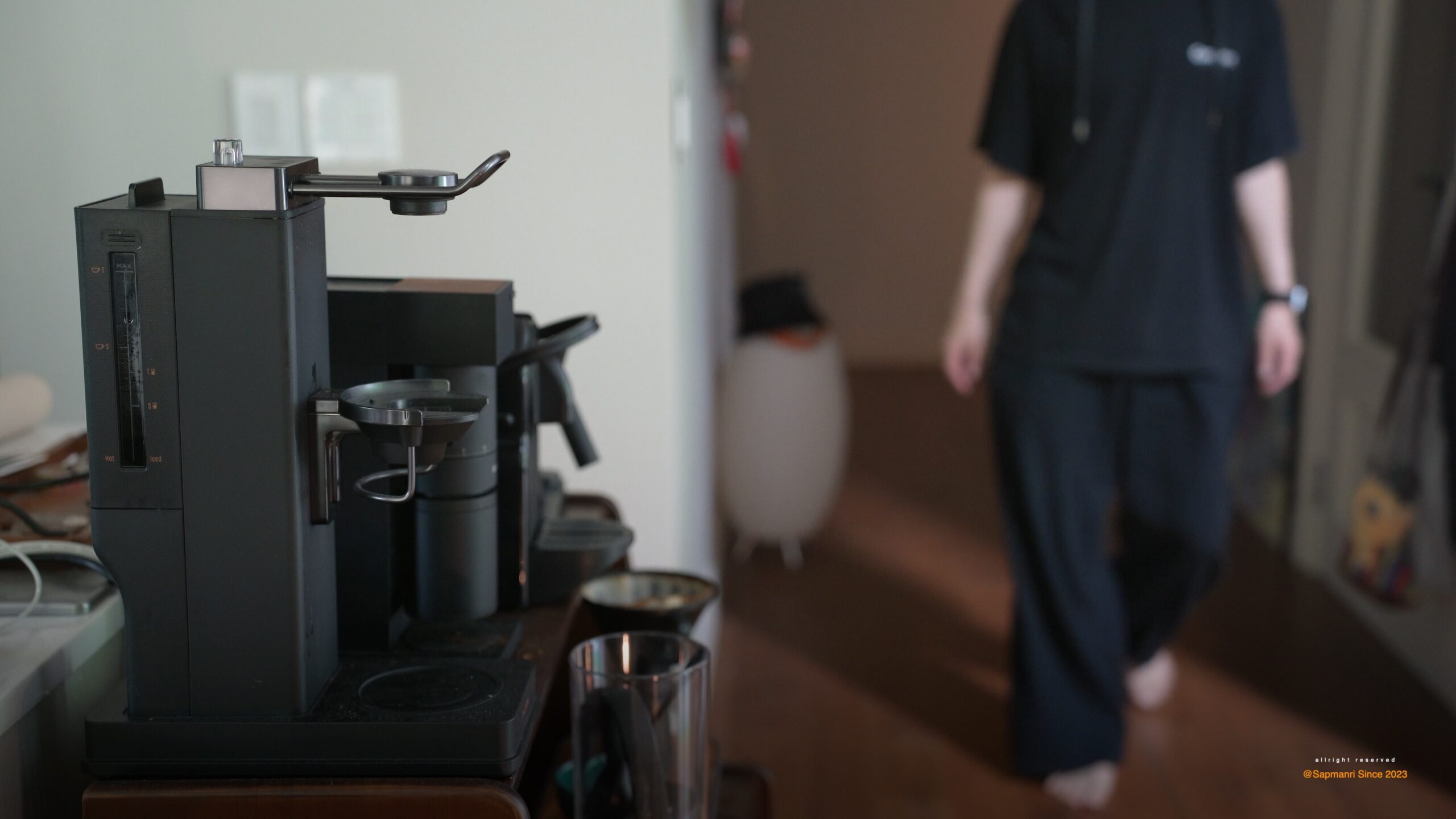
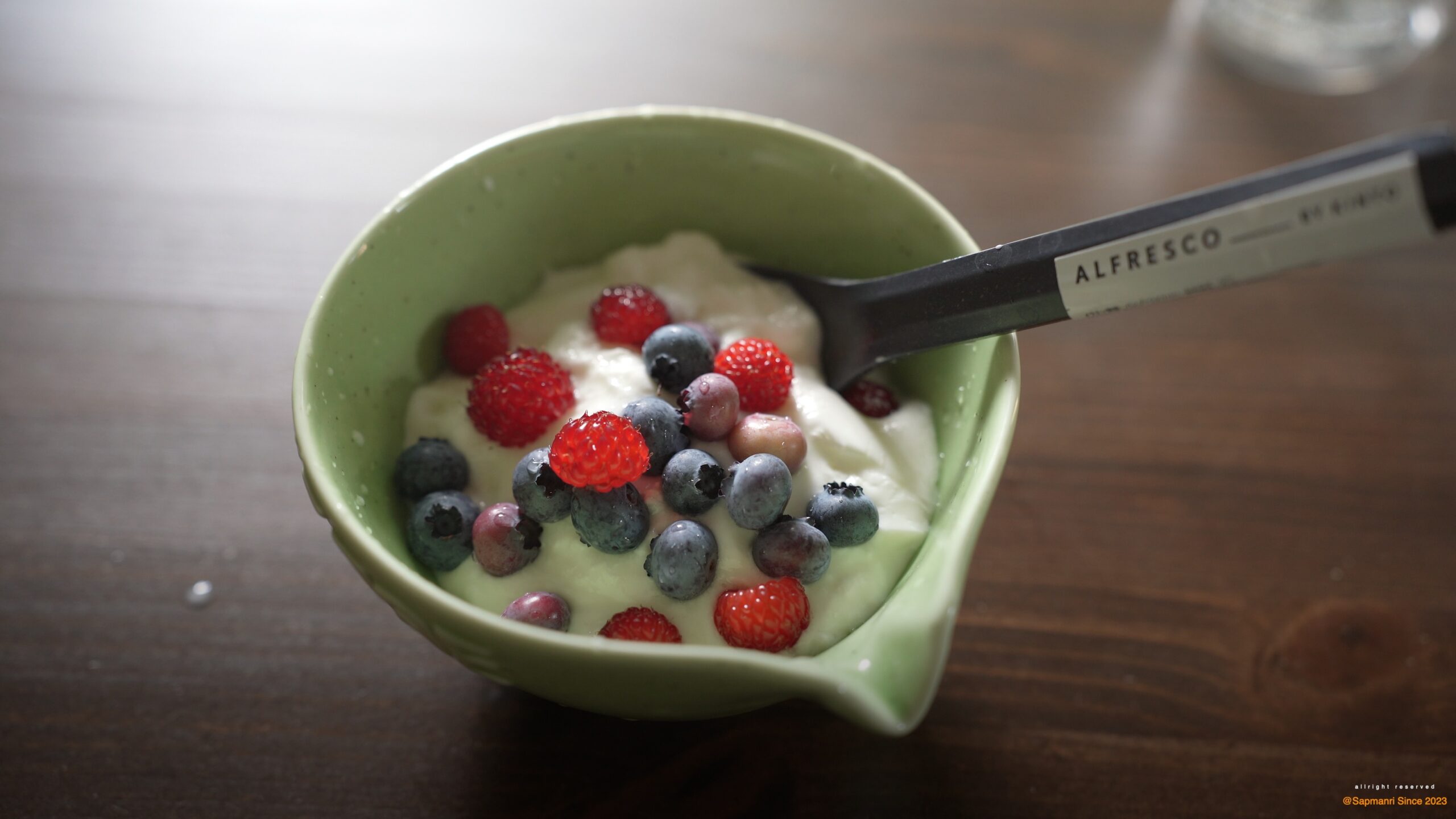
The coffee machine and yogurt bowl keep this from becoming a founder myth. The same day contained breakfast, dishes, pauses, and the return to the desk. We cannot verify from the photographs that every berry came from the yard or that the beans were roasted that morning, so those claims have been removed.
What remains is enough: the structure was being planned inside the life it was meant to serve. The work did not happen after ordinary living was cleared away. It happened among it.
A webpage became another room in the archive
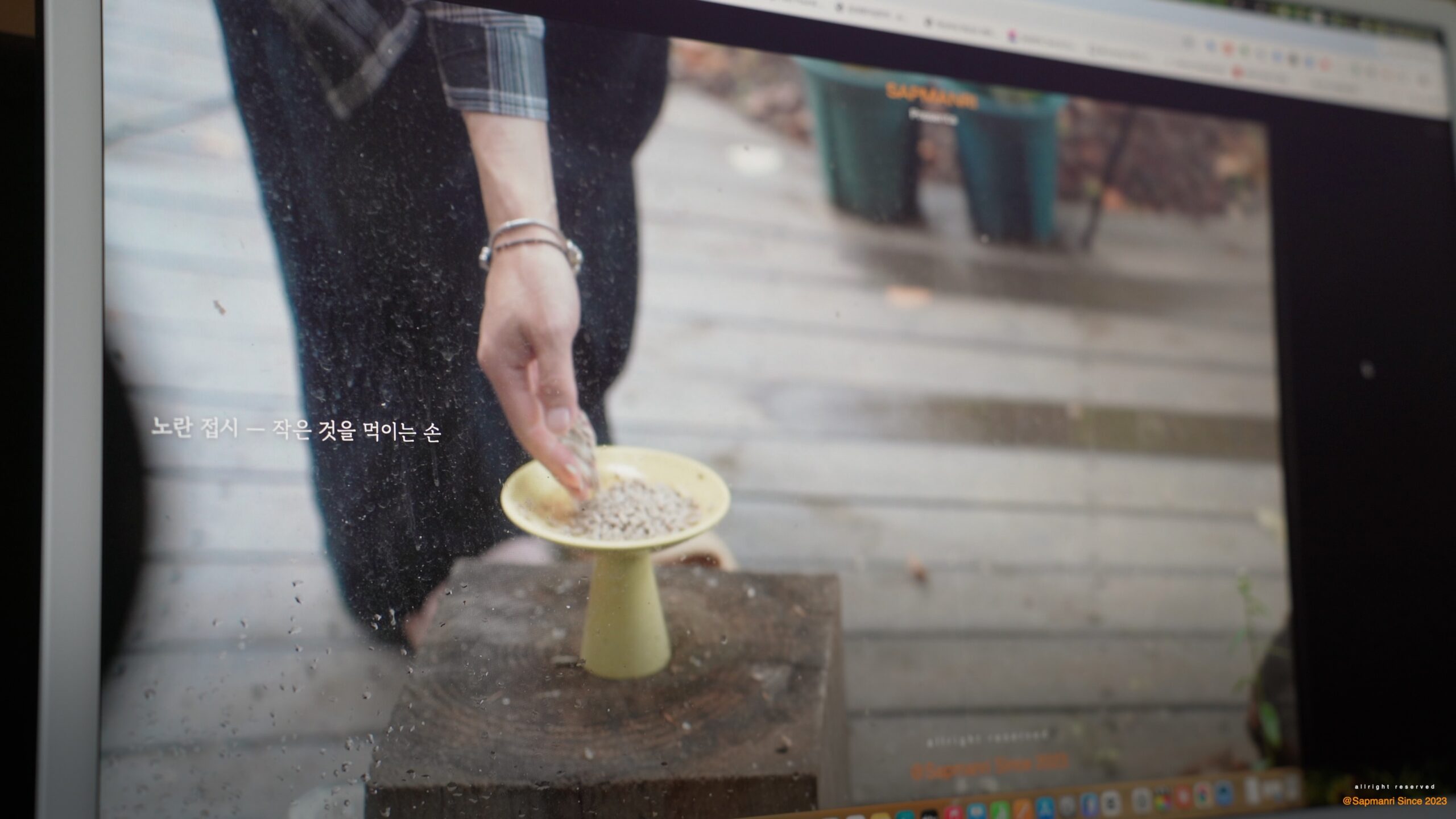
The monitor later shows a Sapmanri page rather than the architecture diagram. That change of screen is the practical bridge between identity and delivery. A name matters only if the pages, archives, and tools beneath it help a visitor understand where they are and why the work exists.
That remains unfinished work. This dated note does not claim that the June structure became a permanent roadmap. It records the point at which we began asking every new page a harder question: does this belong to the same world, and can a person outside the room tell why?
The day ended without a finished answer
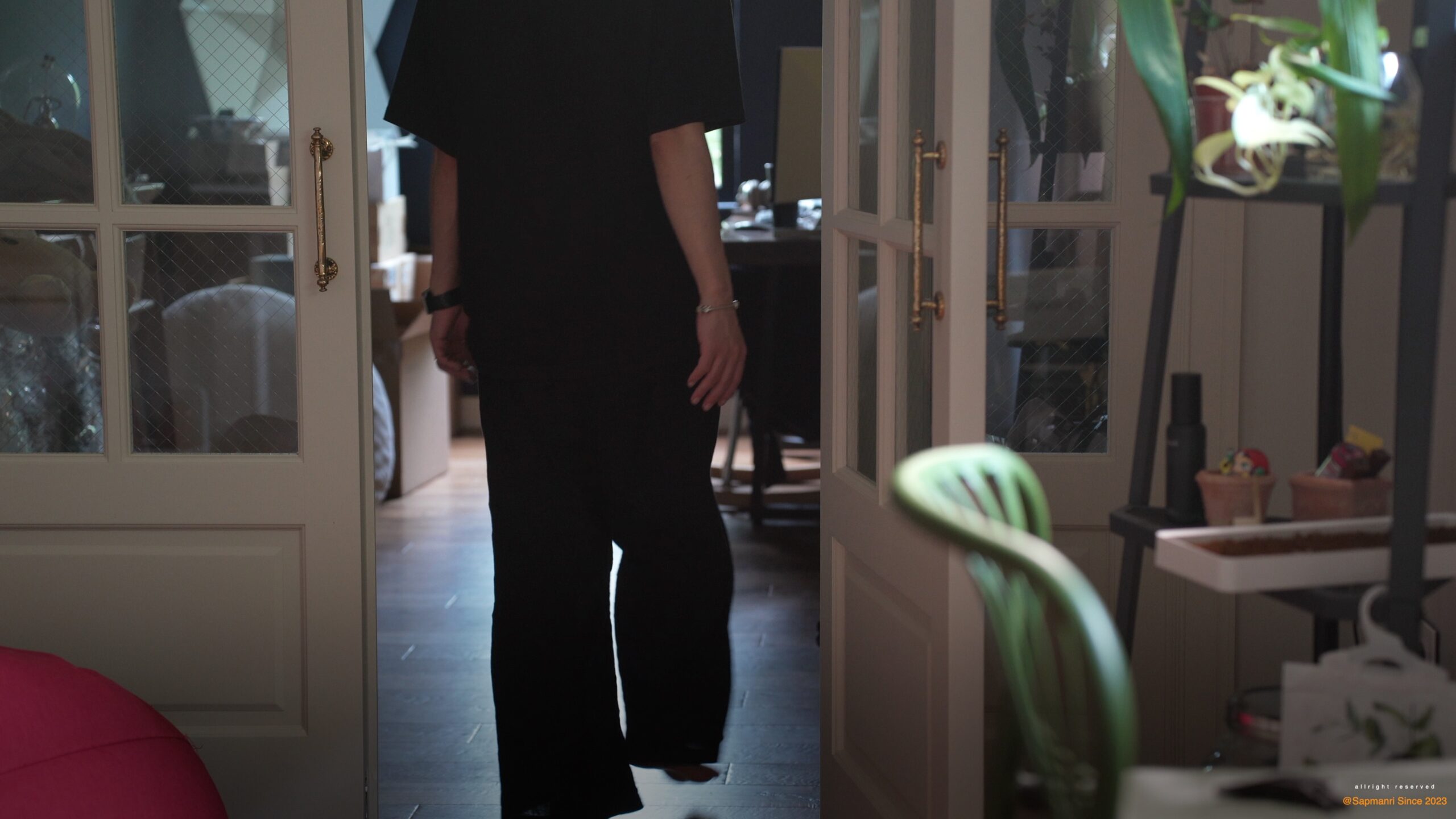
The last photograph is not a product reveal. It is someone walking through a doorway. That is an honest ending for a planning day. A diagram had gathered the projects into one view, but the naming, editing, and building would continue after the screen went dark.
Seen from 2026, this is the useful record: Sapmanri began as a way to preserve a life closely observed. MIMESIS was an attempt to give the growing forms around that practice a shared house without making them identical.