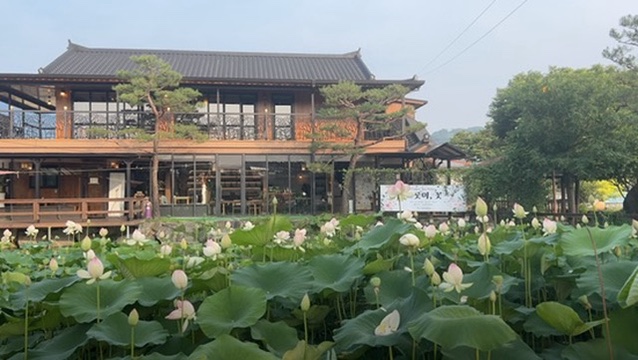
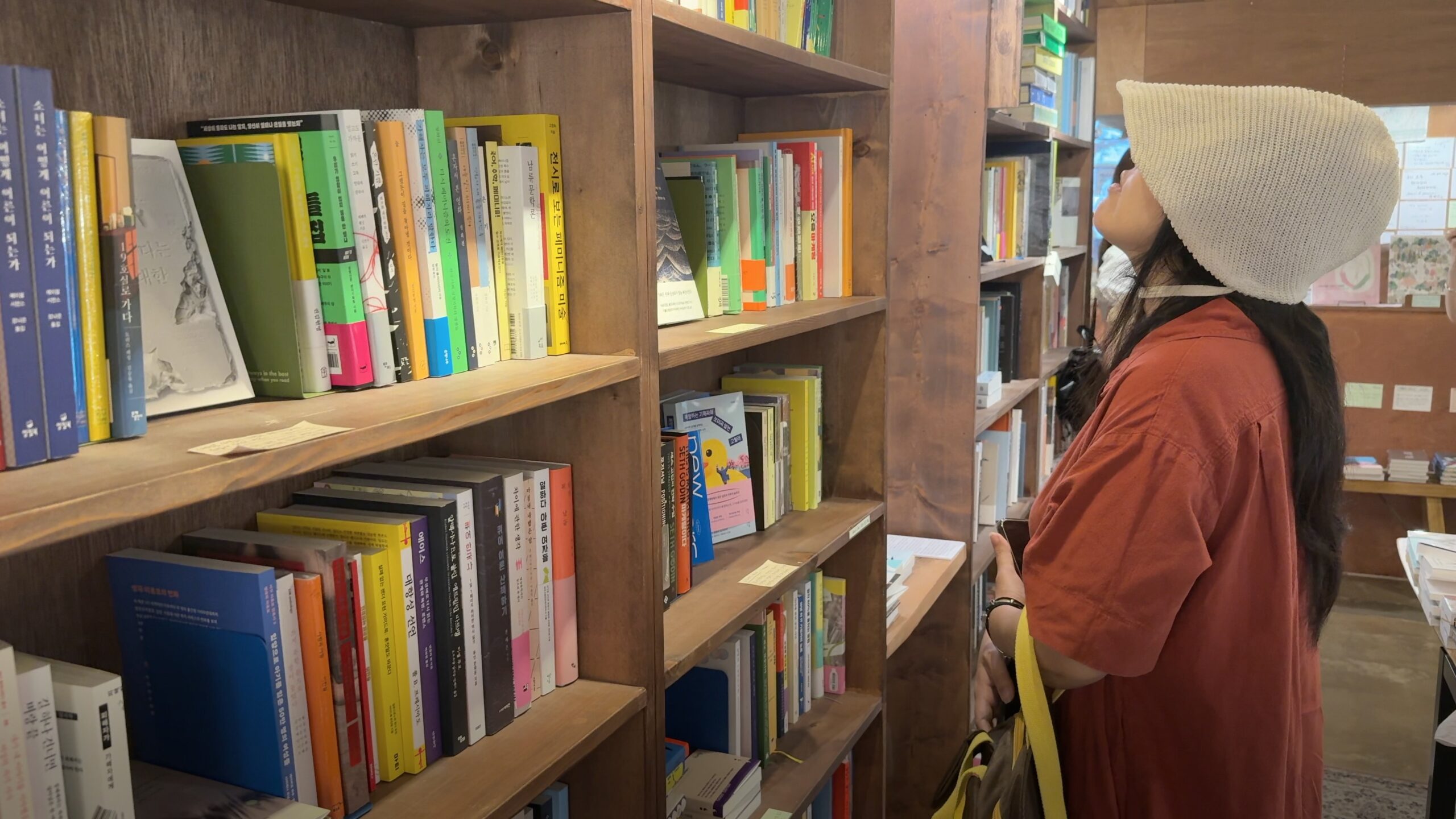
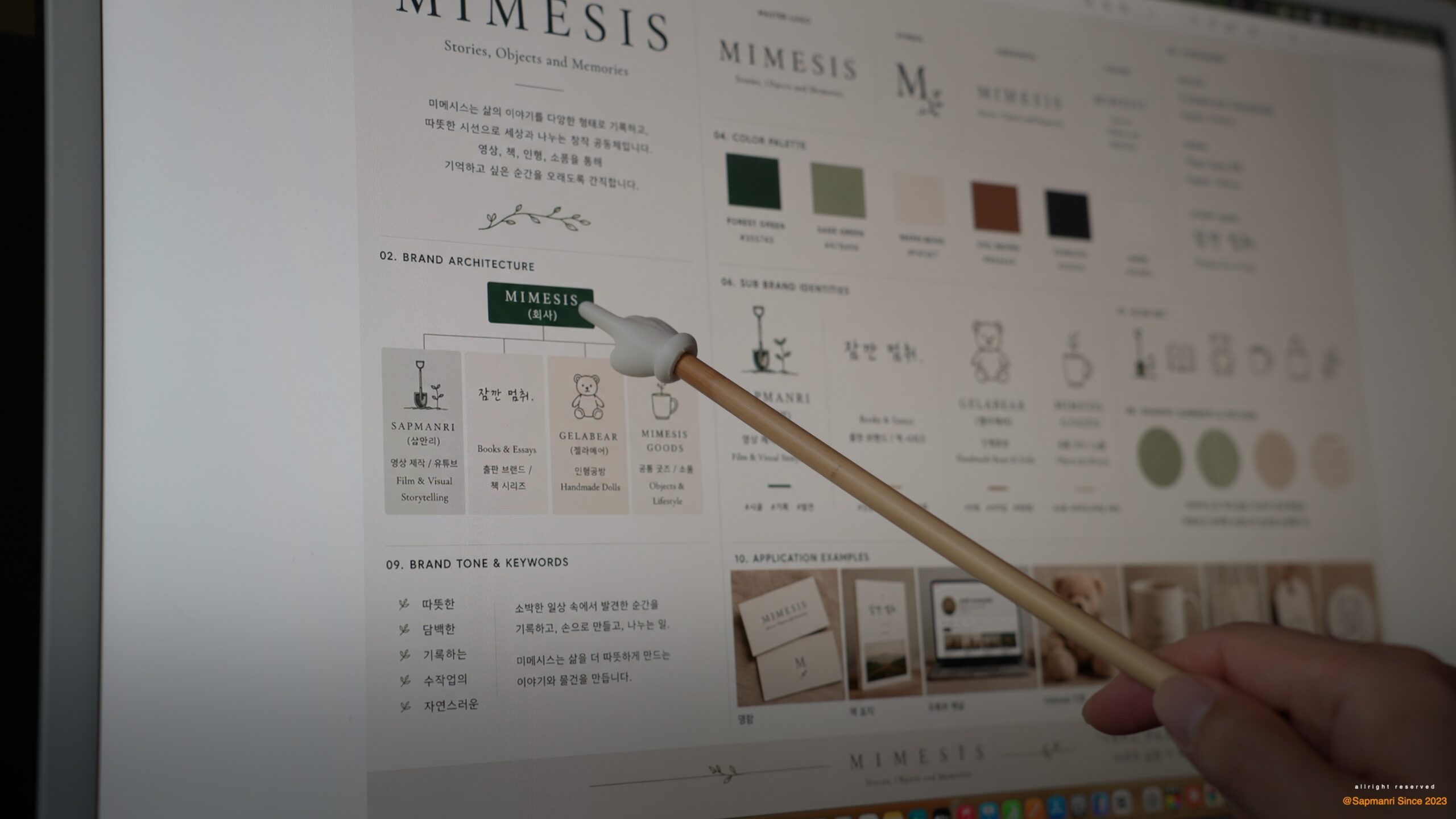
This entry was published on May 15, 2026. Its photographs preserve a green, late-spring moment: a dark courtyard, a tree-lined road, flowers floating in a stone water basin, and a large hanging light among dense leaves.
Korean text visible in the opening image identifies the setting as Hongcheon and calls it a spring-garden day. The note stays within that dated visual record.
The courtyard made the new green visible
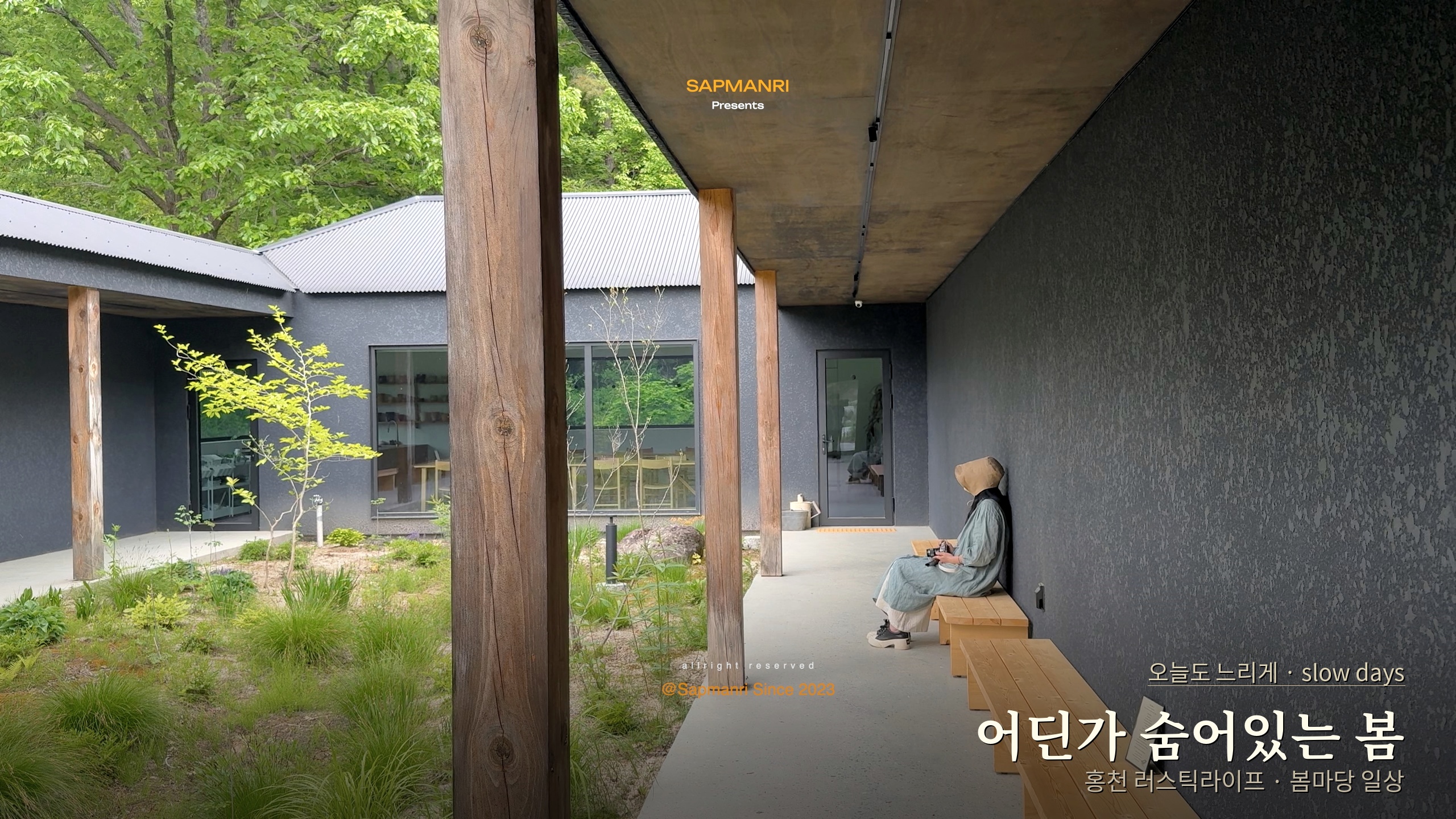
Against charcoal walls, every leaf appeared brighter. The garden did not look like the first tentative week of spring. Trees and shrubs had already filled out, and the seated figure was partly enclosed by green rather than waiting for it to arrive.
The season in these photographs is no longer hiding in a single shoot. It has taken over the edges of the architecture.
The road changed the pace of looking
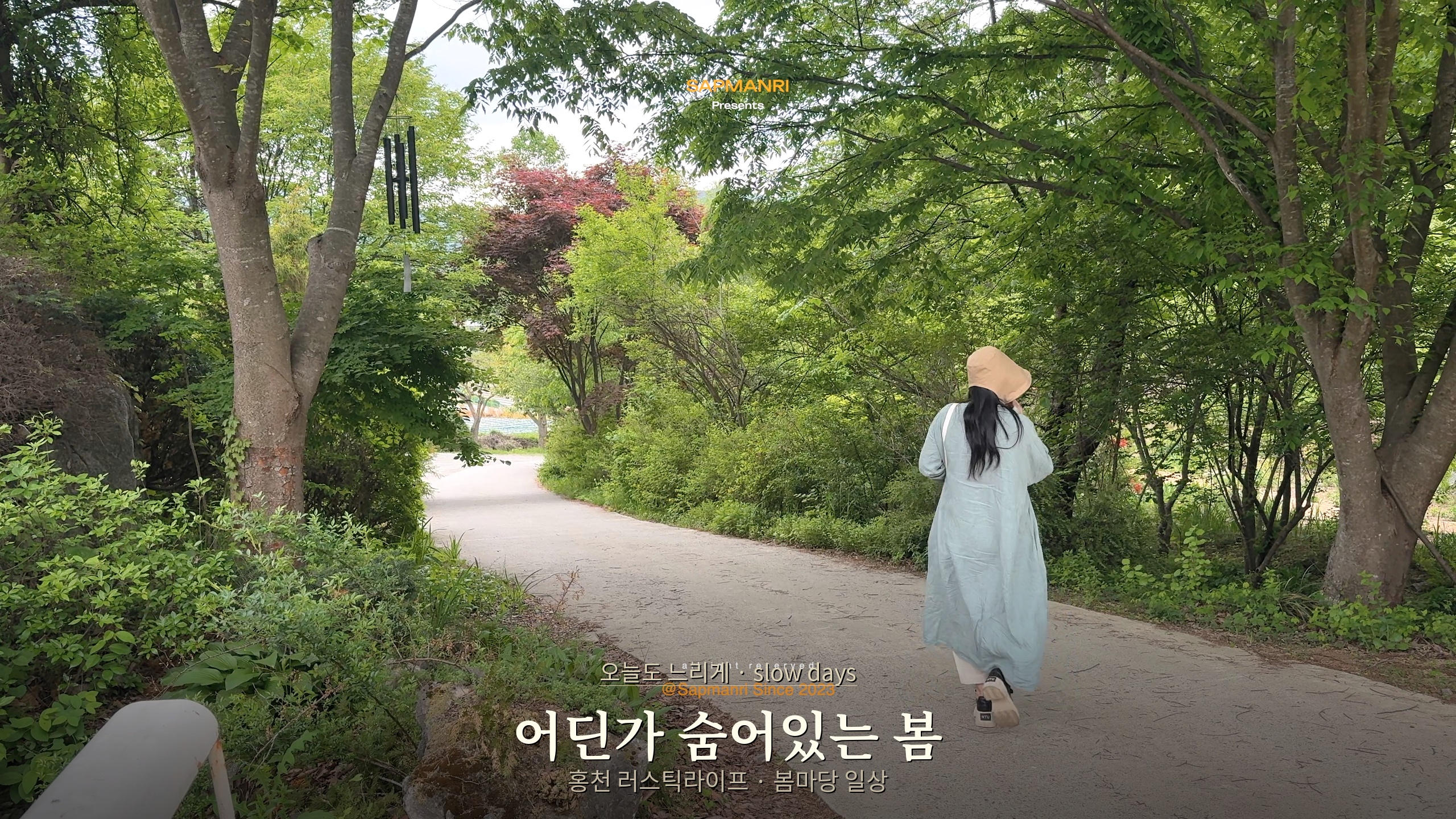
The second photograph moves away from the courtyard and into a shaded road. There is no sign that allows us to name the route, and no reliable way to reconstruct the distance. The useful fact is smaller: the camera follows a person walking beneath a canopy that has nearly closed over the sky.
A garden visit can become memorable through these transitions. A dark wall makes the leaves vivid; an open path lets them surround the body; a close detail then asks us to stop.
Flowers floated where we expected only water
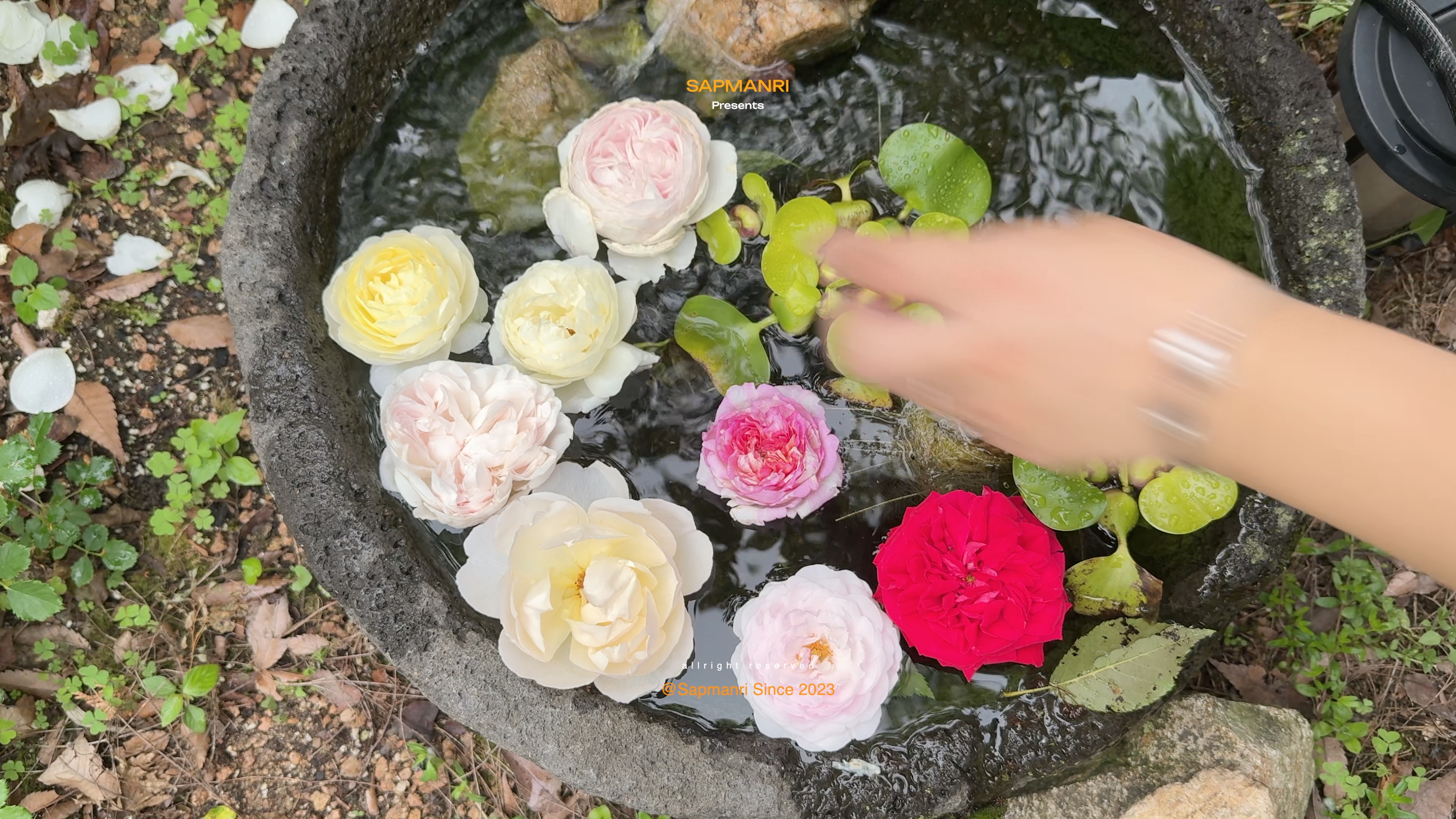
Several flowers floated in a shallow stone basin. A hand touched the surface, disturbing the reflection and the arrangement at the same time. We do not identify the flower species from this frame, because colour and petal shape are not enough for a confident botanical claim.
The photograph works without that label. It records water, stone, petals, and the impulse to reach toward them—an encounter closer to play than documentation.
A hanging light remained among the leaves
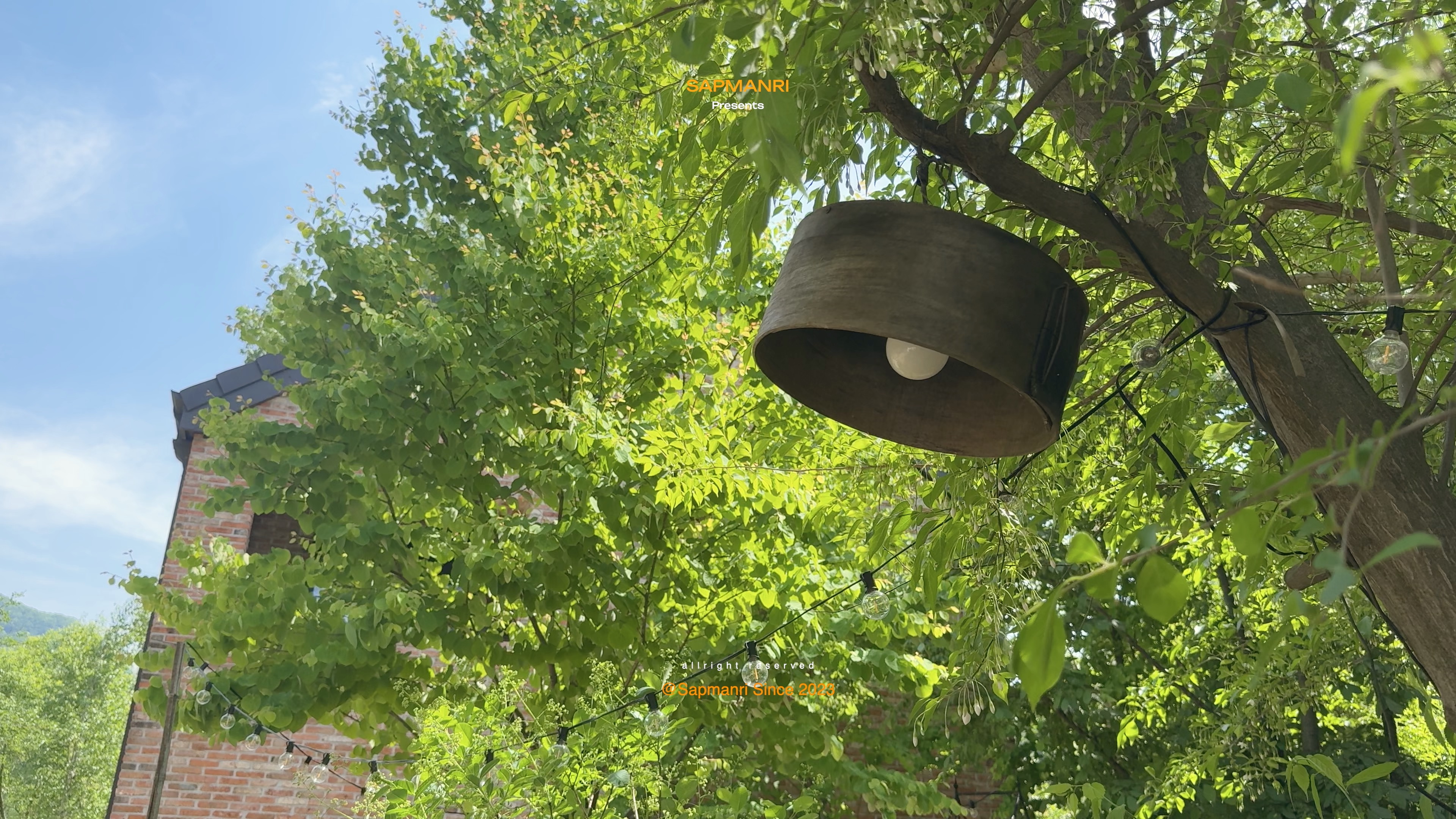
The final close view looks upward. A dark hanging lamp occupies the middle of the leaves, with a line of small bulbs crossing the background. It suggests how the place might change after sunset, but this daytime photograph does not show the lights operating at night.
That limit is worth preserving. A field note becomes more trustworthy when it distinguishes what a photograph shows from what the viewer can easily imagine.
What this visit can—and cannot—tell a traveller
This is not a current venue guide. The photographs do not preserve a readable business name, address, menu, entrance fee, accessibility information, or opening hours. Anyone planning a trip should use a current first-party source rather than infer a destination from this old entry.
As a dated observation, however, the sequence is complete: we sat in a courtyard, walked beneath trees, stopped at a water basin, and looked up at a lamp held in green. Spring was not a promise in the ground. It was already the room around us.